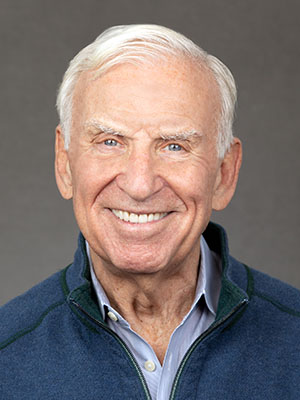
Rethinking the Agency Model: An Interview with Michael Farmer, Chairman and CEO, Farmer & Company Stephen Shaw 9 hours ago <span data-mce-type="bookmark" class="mce_SELRES_start amp-wp-32ab865" data-amp-original-style="display: inline-block; width: 0px; overflow: hidden; line-height: 0;"></span><span hidden data-amp-original-style="display: inline-block; width: 0px; overflow: hidden; line-heig</p> <p><strong>ht: </STRONG> 0;” data-mce-type=”bookmark” class=”mce_SELRES_start”></span><span style=" class="amp-wp-2cf7910"> <p><strong>ht: </strong> 0;” data-mce-type=”bookmark” class=”mce_SELRES_start”></p></span><span data-amp-original-style="display: inline-block; width: 0px; overflow: hidden; line-heig</p> <p><strong>ht: </STRONG> 0;” data-mce-type=”bookmark” class=”mce_SELRES_start”></span></iframe></p> <h3><span style=" class="amp-wp-9530d27"><strong> Michael Farmer is the CEO of the strategic consultancy Farmer & Company and the author of “Madison Avenue Revisited”. </strong></span> <p></p><p> These days it’s not much fun to work in the agency business. Agency staff are overworked and under duress to work faster and smarter. There is the constant worry about layoffs. And now as AI looms over them like storm clouds, they wonder about their career prospects.<br> </p><p> It wasn’t always like that. Back in the 1960s, 70s and 80s, life in an agency was fun, invigorating, glamorous even, a beehive of creativity, where clients treated you as a thought partner, someone to make them look brilliant, come up with “Big Ideas”, help grow their business. Agency profit margins were healthy enough to pay everyone really well. Agency founders were revered as demi-gods – creative geniuses – marketing oracles of their time. And when neighbours asked what you did for a living, you were always proud to say you were in the “ad business”.<br> </p><p> That world no longer exists. Agencies have become sweatshops. A business where too often lowest price wins. Where clients have become incessantly demanding – intolerant of pushback – under immense pressure themselves to deliver “stretch” results. Scopes of work keep expanding, which agencies are obliged to execute at increasingly thinner margins, imposed by procurement officers who urge them to just do more with less. Agencies are now thought of as just another substitutable cost in the supply chain.<br> </p><p> There is no almost no such thing as an “agency of record” anymore. The rug can be pulled out from under an agency every few years or so at the whim of the client when contracts get bid out at renewal time. Agencies find themselves in continuous pitch mode, either trying to hang on to a client in an agency review, or expand their client roster, notwithstanding the out-of-pocket expense, which can take years to fully recoup. When a major client is lost, layoffs are always quick to follow, with the most senior staff the first to go. In today’s agency business, there is no such thing as a retirement party anymore. As a result, agencies have been hollowed out, populated by junior staff, with few mentors to coach or inspire them.<br> </p><p> The decline and fall of agencies can be traced back directly to the rise of the financial holding companies in the mid-1980s and 90s, beginning with Martin Sorrel’s WPP in 1985, when he went on an acquisition spree, acquiring Ogilvy and JWT. Sorrel insisted on fatter profit margins in order to drive up share value and sought to cut the surplus capacity out of his agencies by reducing the head count. But he also hived off the media divisions into separate profit centres to compete against the independent media companies. By depriving the creative agencies of the 15% commission they normally made placing media, they were forced to earn revenue solely through time on page. And that eventually led to procurement being brought in by clients to negotiate the service level agreements, even though they knew nothing about how work gets done in an agency (and could care less).<br> </p><p> That’s why Michael Farmer, author of three books on the plight of agencies, the latest being “Madison Avenue Revisited”, accuses the holding companies of “murdering the ad business”, largely by bleeding the agencies dry over time with their singular focus on maximizing profits. Farmer points to other villains as well – not just procurement, but corporate CEOs for their “short-termism”; marketers for their abuse of agency time, and for callously playing off agencies against each other; and agency leaders who consistently underestimate the scopes of work, meaning agencies get underpaid for their time.<br> </p><p> That’s where Michael’s strategic consultancy comes to the rescue, helping agency leaders manage their businesses more profitably, mainly by aligning the contractual agreements with the scopes of work. His ScopeMetric methodology enables an agency to calculate and assign an expected cost (what he calls a SMU) to any creative deliverable within a scope of work. Add up the SMUs and you can properly estimate the workload.<br> </p><p> Michael started his strategy consultancy almost four decades ago in 1990 after serving stints with both Boston Consulting Group and Bain where he successfully expanded their European footprint. He first got drawn into agency consulting in 1992 when he was tasked by Ogilvy’s London office to help them comply with Martin Sorrel’s draconian marching orders.<br> </p><p> I started by asking Michael what led him to leave Bain and open up his own consulting practice.<br> </p><p><strong>Michael Farmer (MF):</strong> When I moved to the UK, originally in, you know, early 80s, Bain had 30 people in the UK. That was it, that was our European presence. So I worked there for a year and then went to run a tiny operation we had in Munich of about nine people to develop the German business. And I did that for a couple years. And then I met a French CEO. I speak French, so it kind of helped. I wanted to move to France and start a business for Bain there. So that happened. This turned out to be a very good client. I did that for five years and then they promoted me to be the head of the UK, which by this time had 350 people. And let me tell you, I’m not an administrator. I didn’t get to work with any clients. I was just fighting with my 10 British partners. I hated the job. I lasted two years and I quit. I wanted to get back to consulting. And so I took four guys with me and we started … and we just did the same kind of consulting, Steve. We did … we worked with Lucas Industries, we worked with Balfour Beatty, we worked with Europcar in Paris. We did that kind of stuff. And what was out of the blue was getting a call from Ogilvy in ’92 to say we need a strategy consultant, not an industry expert, because we were bought by WPP a few years ago, we’re already not making our numbers and we can’t figure out what to do. So that’s how I got involved. But it was just another client for me.<br> </p><p><strong>Stephen Shaw (SS):</strong> And, and just to be clear, you were doing business strategy consulting at the C-suite level, I presume, and…<br> </p><p><strong>MF:</strong> Yeah.<br> </p><p><strong>SS:</strong> …no exposure to the ad business. How it worked, what the model is, this was all new for you?</p>