



The knock on most loyalty programs is they’ve never really been about loyalty at all. Certainly not in their earliest incarnation as trading stamp programs in the mid-20th century. Not even when the airline industry dreamed up the idea of point collection based on miles flown in the 1980s as a way to lock in frequent travelers. And not even today, when “earn-and-burn” programs are the prevailing model, in whatever industry you name.
The fact is, loyalty programs just about everywhere are designed to serve one purpose: maximize customer retention by incentivizing repeat purchase. Which is really just another, more targeted form of promotional discounting. The benefit to the customer, of course, is getting rewarded for purchases they might have made anyway. And that can be meaningful in this time of financial duress, when so many inflation-weary households are struggling to make ends meet. Most people are willing to stick with a brand if it offers discounts, freebies and perks. After all, they have nothing to lose. But no marketer should ever misconstrue habitualized purchases for loyalty.
Yet marketers love their loyalty programs. Whereas once upon a time these programs were only affordable if a company was large enough to have sufficient computing capacity, today every business, no matter how small, can run a templated, out-of-the-box program for a fraction of what it used to cost. And because APIs make it easy to connect loyalty platforms to the various internal systems of record, the member profiles are made up of high quality first and zero party data, making precision marketing possible. Theoretically, that should benefit the customer through more personalized offers. And while personalization at scale is finally achievable thanks to the alchemy of AI, the payoff for the customer is dubious. That’s because it opens the door to sleight of hand on the part of marketers who can be tempted to engage in deceptive practices.
For instance, one growing trend is to use AI-driven dynamic pricing and offers to maximize profit margins (called surveillance pricing): Higher pricing for some customers, lower for others, based on their behavioural footprint. Or points might be restricted to specific eligible offers. Points might also be arbitrarily devalued – redemption thresholds bumped up – or expiry limits suddenly imposed. All this goes on because the overhead costs of running a rewards program are a perpetual concern of the accountants who fret over unredeemed points. And since there is no offsetting line item for making customers feel good, marketers are pressured to do whatever they can to reduce point liability.
This lack of transparency and fairness is what undermines trust in a brand. And trust is a prerequisite for true loyalty, defined as an unwavering emotional commitment to the brand. Today’s loyalty programs only give customers a reason to stay – not a reason to believe. It is a contract the member agrees to knowing the terms are one-sided and can be revoked at any time. And that makes it a lost opportunity to develop a more reciprocal and trusting customer relationship over time.
The trouble with almost all loyalty programs today is that they are run by standalone business units outside of strategic planning. At best they are an operational extension of the performance marketing team, there to support membership growth and demand generation. The membership base is seen as an addressable target audience – a source of “value extraction” – sometimes even a lucrative ad channel for partners – rather than a relationship building platform.
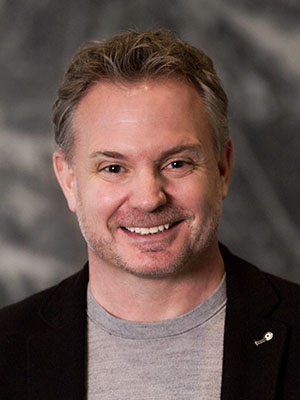
So the time has come to revamp today’s one-dimensional loyalty model which is not much more than an archaic carryover from a bygone era, according to Aaron Dauphinee of The Wise Marketer Group, which is dedicated to the advancement of the loyalty industry. He believes a more holistic approach is needed which makes true loyalty an outcome of a superior overall customer experience. The loyalty program should be integrated into a broader customer management strategy that encompasses customer appreciation and recognition, voice of customer, community management and brand advocacy as interdependent pillars.
Aaron has spent almost his whole career as a loyalty practitioner, gaining a solid grounding in the financial planning and modelling of programs through his experience with both Alliance Data (which once owned the Air Miles program in Canada) and AIMIA, the former operators of Air Canada’s Aeroplan program. Today he is a partner in The Wise Marketer Group which is a global information resource and media hub for the loyalty industry, as well as offering the only certification course for loyalty professionals.
I wondered whether Aaron’s affinity for the math of loyalty marketing may have had its roots in his university days as a Science Major, so that’s where I started our conversation.
Aaron Dauphinee (AD): No one really grows up to be a loyalty marketer is how I’d open up first. But certainly my career arc from, you know, call it “science into loyalty” is a very nonlinear path and I kind of think of it more as a feature, not necessarily a bug. So you know to add some fruit around that, or some meat on the bones around that idea, a science background kind of trains you to look for evidence, and so the instinct of looking for evidence has served me well in a field like “Big M” marketing, but also in the sub- disciplines that range from where we’re spending too long operating on a gut feel in general marketing to those where you’re fully invested in the numbers, focusing on KPIs, redemption rates, attrition rates, enrollment rates like we do in multi- marketing.
So I would say that by and large I tend to bring an analytical lens to marketing overall, which is fundamentally a human behaviour problem that both science and marketing are trying to solve for. So you know, I guess to add a little bit more, I cut through – if there isn’t really in the subject matter, but perhaps it’s a bit more in the questions that both disciplines try to answer. So things like: What motivates people? What sustains commitment? How do organizations build systems around that? These are questions that appear in chemistries and biologies just as much as they do in marketing and in particular multi-marketing. So it’s just at a different scale.
Stephen Shaw (SS): It’s funny because a lot of the guests I have on that are, become well known in the field and the discipline both of marketing and loyalty marketing and customer experience, a lot of them come from English lit or the humanities and they find themselves in this data driven world and they somehow excel at it. You’re kind of the opposite. Where you had science training, go to the Government of Alberta, you’re an administrator of some kind. But then you lead to, I think it was Alliance Data that you went to work for initially.
AD: Yeah, there was a little bit of a gap in there at Shell in fact. And so I was first introduced to the loyalty marketing world through my work at Shell. I was a local area marketer using the Air Miles currency and distributing programs into play to double dip and utilize bonuses on Air Miles base earning and redistribute. In fact using geolocation data early on in 2000 to take individuals who shopped at a particular Shell location and push them to the next two or three nearest locations as we renovated that Shell and then bring them back. And so kind of a very distributive plan in terms of how you push your customers to an alternative location but then also bring them back to the new location for added value once the site has been refreshed and refurbed.
So that was my entry point in, it was a little bit of what do I do? Am I a science person, am I an administrator as you said? But I think the evolution as a career from scientist, into marketer, into educator, now researcher you could add to that, and ultimately advisor. Each layer adds a credibility the previous one couldn't provide alone. And so, if I think even about at the Loyalty Academy, our CLP designation, that was a real crystallizing moment for me alongside teaching introductory marketing at TMU in Toronto which is formerly Ryerson University.
Specifically the CLP program that we have, it formalized for me that the field that we're in deserves rigorous professional standards. And so with that the emphasis that I've evolved into with Wise Marketer Group now is really about loyalty marketing educator, advocate, steward for the industry. And now with our new business of the research coming in to be really one that is moving from fact based decisioning for the industry as opposed to just our opinions and thoughts. But actual here's what the industry stands for. (9.40)
SS: I want to talk about the mission of Wise Marketer etc, - the genesis - in a moment. But I do want to just pause for a moment because I was interested to see that your foundational - the foundation of your career - was actually planning and analysis at Alliance and you leverage that as you seem to move through your career arc. Did that lay a very strong foundation for you, being involved in, as an example, doing business cases effectively for potential sponsors for Air Miles, as an example. I think that was one of your roles.
AD: Yeah, I actually had a choice when I joined Alliance Data Systems. You know for those who don't know, that's Air Miles or Loyalty One as they operate now. But back in the day it was ADS. I was joining to join the Jazz program which was taking the coalition construct into the United States at the time in the early 2000s. And I had a choice because I was one of the first outside hires into the organization versus the core team that came out of the ADS group of going into the Rewards side of the business or business development. And I took and chose to go into business development because I knew that's how you could learn the full soup the nuts as they say about the business.
From there, once the Jazz program shut down after September 11th [2001], unfortunately, you know, kibosh[ed] that journey for us. I went into the program and analysis and planning side of the business and was really, that's where I really started to excel and get the framework for what it is to be an analytical thinker and advisor. And from there scaled into corporate development, so mergers and acquisitions for that side of the business as well too. And so my growth plan, if you will, has always been kind of on the strategic planning, analysis side. And then once I left Alliance Data, it migrated into B2B marketer. So when I think about even for myself as a B2B marketer for the industry, it’s very much rooted in analysis and what can we do to get the best ROI.
SS: And I remember that because I actually did consulting work for Air Miles way back when and, ironically, or coincidentally I should say, I did go out to visit the guy at the time, I can't remember his name, who was running the Shell loyalty program as part of this consulting exercise. So that was quite interesting. But to go back to the P&L part, I mean a big part of it, I remember Brian Pearson1 telling me - obviously the former president of Loyalty One - telling me that the big factors were proving the lift and shift in potential consumer spending as a result of obviously adopting the program.
AD: Yeah, and we were, when we were selling in on the business development side, we were doing analytical models that were one year models and in the US we were actually doing it out five years because we know that there's a natural uptick. So it's like a [?] curve, right, in your growth, you get a big push in year one and then it starts to stabilize and normalize over years two through five. And so that's how we were doing the modeling to show the lift that you would get from your existing customers for launching in a coalition construct, the shift that you get from new partners other than your own brand participating in, and then we also tried to do the retention grab as well, too. That one was always a bit harder to sell on. But those first two metrics were core to creating basically a P&L view, as you said, of the program's benefit to the retailer or partner that we were selling to.
And we sold on the facts - like we sold - we had conjoint research that put together the right combinations of brands in a coalition and then said to the actual retailer, we know you'll get XYZ, because we've asked clients if they have this coalition of partners with you in it, how much of them will go to you as a lift, how much more they'd spend because you're in that. So we were very, very analytically driven, particularly in the Jazz program for the US and, and that then started to extend into our thinking and advancement with Air Miles, because air miles sold very similarly as well too.
SS: Yeah, it was interesting because when I was dealing with Air Miles back then, they had Gary Saarenvirta running their data mining department at the time. I'm sure you remember Gary. He was brilliant.
AD: He is literally a rocket scientist, is what we always say about Gary.
SS: He was a rocket scientist and a very nice gentleman. Created his own AI company, or I call it a Machine Learning Company, or Deep Learning Company, I guess. He was one of my first podcast interviews, actually, Gary. But yeah, everything was rooted, as I recall, in understanding the data. But let me also ask: then you leaped to AIMIA, which owned the Aeroplan program for Air Canada, bought it back, obviously, and you were, I think, in charge of coalition strategy, if I'm correct about that.
AD: Well, first I did a little stint in their thought leadership, and this is where I became, formalized as, quote unquote, business-to-business marketer. So I was in the thought leadership - we called it knowledge development team - that was there. We were building out essentially what the Wise Marketer Group were doing, internally within AIMIA, to build out, kind of a version of what Alliance Data had in their Colloquy2 business. Well, not the consulting side, but certainly on the publication and research side.
And I had an experience with dealing with that business when I was in corporate development at Alliance Data, because I was down being the one that's doing the assessment of who should stay, who should go. What parts of the business do we roll up into Brian Pearson's organization? What parts do we then at the time put into [?], Brian Kennedy's3 business? Because we just bought Epsilon as an example. So we kind of separated that frequency marketing business into two chunks and I was instrumental in helping the decisioning on that when those, when we broke up that business.
But at AIMIA specifically it was, the intent was that we were planting seeds and trying to generate future conversations and not necessarily be seen as just hawking our wares, the products and services that we had. And we could do that because there was two lines of businesses. There was a coalition set of businesses with Aeroplan in Canada and Nectar in the UK and then also the Middle East as well and then some stuff in Asia. And then there was also the proprietary business which was the old Carlson Marketing4 business which had extended proprietary business programs. And so we had to be able to talk holistically about loyalty as a discipline, as a marketing principle, and where you were starting to move the lever on changing consumer behaviour, as opposed to just hey, we have a black box. Would you like to buy our black box? Oh, you don't like our black box? We have it in gray or red as well. Would you like one of those instead? So it really was holistically at kind of this knowledge development or thought leadership level that we were selling as opposed to being product centric. [16.03]
SS: Well, and you, and you were really ahead of the content marketing curve at that point.
AD: Thank you. Yeah, I appreciate you saying that Stephen. We were one of the first at AIMIA to use actual content marketing platforms early on in our backend learning management system to help drive that the early days of what we called the AIMIA Institute. And it's just unfortunate that some change in senior management started to de-emphasize the focus of thought leadership into more product centric marketing. Which is then, when I think when you were picking up on, I hopped into the core Aeroplan business, had started to work with John Boynton5 who was the CMO at the time, really well known marketer here in Canada, very successful at Rogers and now at Arterra Wines and it was at Toronto Star for a period in between.
But John brought me into the team specifically to help build up the small business strategy because I have a small business expertise as well too from my time when I was at Warrilow, which eventually was bought by Corporate Executive Board and is now owned by Gartner. That's where I did some pre work for coalition strategy for the small business segment with AIMIA and then both John and I - I think within days of each other - actually decided to move on to different things. He eventually went on to Arterra Wines. As I said, I decided to go into machine learning at Rubikloud6, which was our early artificial intelligence program performance decision making operation, was there for a small bit to get them through a bit of a raise.
And then and that's when Bill scooped me up and said, hey, I just bought this business called the Wise Marketer. Would you like to come and give me some strategy work? Because I'm not sure exactly what quite to do with it. And it's only coincidental that Bill didn't know when I was at AIMIA, I was actually looking at the Wise Marketer as an acquisition strategy to enhance our thought leadership experience capabilities to get a list of people and bring that in house. And so it's just very serendipitous in terms of my path of how I've ended up now being a principal partner of Bill Hannifin and myself as the two keys running the Wise Marketer Group and the Wise Marketer Media.
SS: What a perfect fit given your loyalty experience, your content marketing experience, everything really. That was kind of neat.
AD: Yeah, I feel like I've been very fortuitous in the opportunities that I have and I would be remiss if I didn't say that. An extension on that too is my time at Bond Brand Loyalty where I was helping to build and deliver the “Loyalty Report”. Like still the longest tenured research report in the loyalty industry. I think it's 15 plus years in some markets now. I was using that content when I was at AIMIA for our thought leadership. We were okay with supporting other people's opinions and it's actually a bit of the foundational work that in terms of the mindset that we have for the Wise Marketer being the unbiased source of truth so to speak for the industry, where we're happy to make sure that we publish all different types of perspectives and viewpoints but we do come from a fact based perspective and Bond certainly has some credentials in that. And working with the Bond team and then delivering for VISA’s clients to a bunch of brands around the performance of their programs certainly was a nice path into how we're looking at research and ourselves at Wise Marketer. It's certainly not competitive. I would say it's complementary to the work that Bond's doing. They get right down to the program level. We're backing it up to more Industry level because we have a thesis and hypothesis that you really need to know your own industry very well and the nuances for it to infect loyalty appropriately for your customers. And “infect” is an intentional word there to create an infectiousness around them, not in a negative sense, but in the truest definition of the word. Stickiness is another one. But if you don't know your industry, there are certain macro things that can come into play that start to take you away from the true levers that will make changes appropriate for your industry, and I guess loyalty can't be a one size fits all. It needs to be catered and more bespoke going forward is our hypothesis. [20.00]
SS: I think that's one of many challenges which we're going to address as we go through this conversation. But I do want to get some clarity around the Wise Marketer mission. It's genesis, really. You mentioned acquiring it. Just some sense of your mission, your membership base, what you're trying to do for those members. Just give me the big picture on that.
AD: Sure. So where we're at today, it's not where we started, but where we're at today is we have three lines of business and kind of one North Star is how I kind of preface it. We are in the business of evaluating the discipline of customer loyalty marketing. So what I mean by that is, WMG for short, Wise Marketer Group, exists because the loyalty industry historically has lacked a trusted independent voice. And so the Wise Marketer, which is our media platform is in fact the media outlet for the industry. It's probably one of the very few, or if not only, that does so without a vendor agenda, right? That independence is meaningful differentiator in a space full of a lot of sponsored content.
So that's number one line of business is the Wise Marketer business, media business. The Loyalty Academy. We built our Certified Loyalty Marketing professional designation. So CLP for short. it was built on the premise that credentialing loyalty professionals raises the floor for the entire industry. When practitioners hold a common framework, you find agency conversations just get that much smarter. So that's having a common taxonomy, jargon, set level of understanding, a baseline. We thought the industry needed that and we built it as a “practitioner for practitioners” mindset. So it's not “up in the clouds” academic. It's meant to be able to be applicable when you take it back to the office after going through the program. So that's the second line of business.
And then the third is the genesis of, of my business partner Bill Hannifin and I, listening as we're in these two other businesses, me having a research background and listening to conversations about the OGs, the originals, and some of those OG foundational things maybe not being true today. Things have evolved and changed over 30 plus years and so we got the idea that we should start to build out an unbiased source of truth that's fact-based consumer research. Similar to Colloquy, similar to Bond, similar to other studies that are in the market but beholden to the industry. So we're not, we're more about rising up curiosities that the industry should have as opposed to necessarily having a bias about a set of products or services that need to be sold.
And so, with that we built out and announced just last year the WMG advisory and research arm which includes our Wiser Research and Wiser Forum products. And so that's kind of the two. When people can subscribe to our research subscription through Wiser Research and then we hold in-person smaller get togethers that we call Wiser Forums, because we believe the large conference platforms are doing the role that they need to. But where the real nuggets of information and insight come from are in smaller, more bespoke conversations. And so we're facilitating and creating those and we believe that between media which informs, education that trains people, and then research that is proving things, those three lines of business really give WMG kind of, to use our own terminology, a 360 view of the loyalty industry ecosystem.
SS: And there are 15,000 members or so I think I read?
AD: Yeah, so all up on all of our channels we're about 15,000 and that's not including Bill and my own personal LinkedIn side, it gets closer to 20,000 real quickly. But on our subscriber base we're into 12,000, 12 ½, on an ongoing basis that we have access to just through the Wise Marketer subscriber base. I would say the other asset that we have is our community of CLPs. We have nearly 1,300 around the world now in 59 countries I last looked at and that is continuing to expand and grow and we've got some plans for later this year to even improve upon the scale and reach of that community as well.
So there's kind of two buckets if you will of groups of practitioners that are coming together. One is more broader, just wanting insights and information. The news and source of insights for the industry is how we position the Wise Marketer. And that's what you might want is just those facts or you want something a little more in depth which is to be a part of a practitioner community and have a certification designation alongside your name like the CLP. So that's kind of the two buckets.
SS: And it's a worldwide membership?
AD: Yes. Yeah, 100%. Yeah, it's our subscriber base. You know we often get lumped in because I'm in Canada and Bill's in the United States that people think that in fact we're North American focused. We are, we do have a good contingent of subscribers that are North American focused. About 35%, about a third. But then it really quickly jumps into Europe. Very strong - Middle East is a growing area for us, a lot, a large part due to the CMP set we have there, a strong base that's out of there. South America, Australasia, APAC region as well too. So yeah, we cover I think 180 different countries. There's a very long tail to that - won't lie. But probably the top 20 countries that are the largest producing GDP countries where we have fairly substantial basis in those. [25.18]
SS: And there's nothing really comparable to your organization I can think of off the top of my head. I mean you obviously have the consultancies et cetera but, but then you've got all the vendors out there with their own content platforms all pitching their point of view on the world and as you point out, you're totally sponsor neutral I gather. So you're not getting any revenue from sponsors or is there sponsorship involved as well?
AD: No, we're definitely in, in the for-profit business. We're not just doing this out of the goodness of our heart so to speak. But we. Yeah, no, we have a mix of editorial content that we produce ourselves as well as paid sponsorship components as well too. So we have the media business is very active in terms of content development and content distribution. So two aims or two different degrees of ways that we can be involved with our marketing vendor community and that would be a big group that we are involved in.
More and more on the brand side we are involved with them through our research or consumer research because brands want to know what consumers are thinking and then a mix between marketing vendors and brands. Certainly on the education, we have probably a 50/50 split, I would say, of brands who have the CLP designation through to marketing vendor teams that have the CLP designation. So it just depends on the mix.
SS: So I want to now take a step back and look at the world from a macro standpoint. And I want to do some level setting and get maybe a few provocative questions on the table before we run out of time. And one is, it's just my observation that loyalty tends to be, the word loyalty, tends to be a bit of a misnomer as it applies to the industry today. And by that I mean, first of all, no one can agree on a textbook definition. Even if you scour the academic journals you find all kinds of different takes on what that really means. And then of course, we have the whole loyalty program industry, which really has landed on discounts and perks and freebies as the incentives to basically buy loyalty. So they're serving as barriers to exit, or they're serving as a retention strategy more than anything else. When you have the Loyalty Academy and you're talking to students about the concept of loyalty, what's your definition?
AD: Yeah, so I mean, the construct of loyalty that we always get back to is that loyalty is a discipline. What we mean by that is that it allows for you to think about the changing of consumer behaviour on a regular basis and not necessarily be beholden to a programmatic view of that. And what I mean is we take a step back and say, what is an organization doing to elicit a response or a set of actions or behaviours from their customer set that is in benefit of both the brand and the customer, ideally equally or fairly close. So there's an element of reciprocity. I think that's how we would, you know, put the stake in the ground.
And the reason we do it that way is because, or to take a step back, I'm really glad we're called the Wise Marketer and not the wise loyalty marketer, because we do view this as a large “M” marketing exercise and that loyalty is ingrained as a foundational component of marketing holistically. So whether you're at the brand essence level, where you're trying to do emotive responses through to direct marketing or digitized social payment stuff, like, those things all holistically are about eliciting responses from consumer behaviour. And it gets to consumer psychology. Much like the comment I made at the onset of the questions we were asking as a scientist, right? It's about changing consumer behaviour.
And so we look at it broadly and holistically. We use the terms big “L” loyalty versus little “l” Loyalty. We are definitely in the broader “big loyalty” looking at the emotional states of how you can induce behaviour and affinity for a brand or a set of products even, from a customer. And not necessarily about just can you build a better mousetrap that's going to issue some points that they can then utilize for a redemption of a choice of things ranging from aspirational through to quote unquote, trinkets and trash, or gift certificates or a discounted offer. Yeah, that's kind of our view on it.
SS: And yet, and we've talked about this, you have an entire loyalty industry growing at double digit growth rates. You have this vast array of loyalty technology platforms out there supporting this growing industry. And yet the whole industry's model is based on something that's 50, 60 years old. Like it's basically the trading stamp model digitized. And I want to swing back to that conversation. And now practically every company has a loyalty program of some kind.
First of all, two questions here. One is what explains this growth rate, I think is probably the best way to express it, and are we approaching peak loyalty? And by that I mean the market seems to be oversaturated and a lot of these programs are cut from the same cloth. And it's a big yawn for a lot of consumers today, right? It's just like, okay, that program works kind of like that one. And there's, it’s a no brainer really to sign up because why wouldn’t people. But in the end it's not a difference maker, right? Frankly, the way they're structured today. [30.36]
AD: Yeah. So I think there is a lot of me-too. I think that's kind of what you're alluding to in the industry is there's not a lot of revolutionary thinking. Certainly loyalty has evolved from the S&H Greenpoint stamps through to more modernized loyalty. And I think it will continue to adjust and change based upon the technical infrastructure that's allowed as well as the changing expectations of consumers, I think is what the real driver is of loyalty. But it takes it back to the definition you're talking about. If you only think of loyalty in terms of that little “l” programmatic loyalty, then that is the view. What you just described is exactly the problem with the state of the industry.
And we talk about in a couple of series of ours loyalty being unstuck. How do we get it unstuck? Because it feels stuck, too common, too familiar, too similar, like you just described Steve. But when we look at it, we think about loyalty as a discipline and as a part of marketing holistically. And so we think to ourselves actually it's not, it's just we need to start to think about how we translate the impact and influence that loyalty has in the businesses that they're operating within.
And so one of the key paths to that, and we're hearing it more and more starting from some of the vendors finally, we've been saying it for a number of years, is to talk about KPIs and definitions of success. Less in the loyalty terminology that we have and more in the terms of business successes. How does this define a success that a CEO or CFO typically, but a CEO number one, his or her CC audience and how is it impacting the business growth, revenue targets that they're trying to drive or cost cutting and saving, all the things that are successful KPIs for a business is how we as loyalty marketers need to start reframing the conversation and bringing it, rising it up.
And I think if we start to do that we'll actually find that a lot of these programs you're talking about, these me-too programs or similar programs will start to whittle away. And we know that that's the case probably fairly, fairly confidently because you can take a report like Bond where I think the average is upwards of 15 or 16 programs that people are enrolled in across a bevy of sectors but they're only active in less than half of that - seven or eight programs, right? And so right there you know, number one that half of the programs are like they're just trying them out and they're not keeping up. And I think Bond's definition of active is something like a 12 month period. So it's like you really know that that that group that they're not active in is really not doing much and it was just a trial or a moment in time engagement. And that's not true loyalty whatsoever because they didn't engage the customer. And for us we know that engagement velocity matters. You know, we have a report on it. The 90 day engagement window is a real thing. Programs that you know, can create a meaningful earn or experience moment in that first three months of membership, like they dramatically outperform those that wait for a natural purchase cycle.
And so there's some things that you can start to trigger in terms of how you have your program design and the way in which you want to engage your customers that inherently are less about you and getting a transaction and more about what you can do for the mindset of the customer. And that's what we're positioning is understanding the mindset of consumers and designing the programs in that archetype of whether they're monetary or whether they're about reciprocity.
So they like customer good excellent service, good quality products. Are they status oriented? So they care about the social interaction and the connection of identity or connection to community or their values driven or they're habitual, which is just a function of, by and large convenience and familiarity. All these mindsets can exist at the same time within one program. And where we've made a mistake as an industry is we've designed them primarily to be focused on the monetary. So it's not surprising that, you know, 60% of customers will say that they're monetary oriented because we built the mousetraps this way. And so we need to start shifting for the other mindsets.
SS: Well, you've trained a whole generation of consumers to be points addicts is the problem. And it's interesting because as part of this show I'm talking about marketing transformation, but I also have a lot of guests on talking to customer experience. And it still is remarkable to me the divide that still exists between marketing, which sees itself largely as demand generators and growth engines, and the CX world, which really sees itself as how do we keep customers happy and never the twain shall meet, right? This seems to me a fracture of organizations where there's misalignment between the goals. And just go back to your point about the value of loyalty programs to some extent is convincing executives that it can be a growth engine. Customers can be a growth engine. This isn't just about going out and dominating market share and acquiring new, new, new. It's about how do I get incremental growth from existing customers? And to that extent, loyalty programs, in collecting data, enable that addressable relationship. Where it falls down is it still is largely transactional. Is that fair to say? [35.40]
AD: Yeah, I think where it falls down is actually there's, there's, and it could be on the CX side as well as the, I mean, we look at those two holistically, we don't kind of separate them as much as others do. Like people are really beholden to their own titles sometimes which is interesting. But the gap between loyalty's ambition, what a brand says it wants to do and what they actually can execute on, like to me, that's a big challenge. And there's typically three or four reasons for that, right? And the most overtly present is that there's a persistent challenge for some brands. And that challenge is that there's this gap between what the program is actually promising to a member and what the member actually feels. There's always a disconnect. And we ask some of our consumers the same question that we then go to some of our CLPs or marketers with the very same question. And that gap is always intriguing. Marketers always overplay that they are doing much more for the customer. And so I think that's where we're falling down. And programs, to your point, invest heavily in the earn side and they underinvest in emotional resonance, and oftentimes emotional resonance of redemption, right? And that's where a material portion of customer loyalty is actually built or lost. And I want to be clear here. I wouldn't say that it's all of where customer loyalty is built, but it's a material part because it involves that payoff, the what's in it for me. But there are other areas that CX starts to play into that get into how you build and think about loyalty as well.
And I think another challenge that we have is that we as an industry are the ones defining loyalty and what we think is the most loyal and best loyal, when in fact, if you ask a consumer, it's very, very different in their mindset. A common situation I refer to regularly is a research study that we did for one of the fuel companies here in Canada where the research that we asked the consumer was, how do you define loyalty? And they defined it as three out of every four shops in a given month. But the fuel operator said, no, you're not our most loyal unless you're shopping here once a week, four times. So that gap right there already creates a disconnect because the brand is not treating a group that feels that they're loyal to that brand. They want that forgiveness week, if you will, to go elsewhere for a variety of reasons when you're shopping for fuel, a commodity item but the brand is saying, no, we need you at this level in order to then validate and justify the amount that we're spending on you as a loyal customer.
And to me, that's just inherently a fractured structure and the premise for why things have probably fallen down. So that's number one for sure. The second is I just don't think oftentimes that there's enterprise alignment and the alignment if it is there, is chronically underestimated, right? Like loyalty programs, they often live in one department, whether it's marketing or CX or more often on their own. And they lack the internal authority to really connect data, have any influence over product, or in most cases drive the operational changes that would actually make the program better. So there's a couple ideas as to why the challenges exist.
SS: Oh my god. I mean you hit the nail on the head. That is exactly the issue. Loyalty program is run in a standalone area distinct from CX and to some extent sometimes distinct from marketing as opposed to being the glue that brings it together, based on this foundational data, which should drive insight which should explain how the organization could grow going forward. Absolutely bang on. It needs frankly, an organizational redesign and realignment of the organization. That day may eventually come. I want to swing back to that conversation toward the end because it speaks more to what emerging models might exist going down the road with AI coming along. I do need to leave time to talk about that obviously.
But just to cut back to loyalty program design today, that's what we're really talking about. I mean the broader picture of loyalty building and brand building and all that stuff is actually a whole other conversation. But just in terms of how programs are designed and operated today, and we talked about them inheriting the trading stamp model and digitizing it, but there have been some advancements in the way these programs are run. What are some of the trends that you're seeing in terms of how programs are changing and evolving and trying to widen the diversity of rewards or the types of rewards and bring more of a focus on experience. What are you seeing in the market today across sort of the best in class programs? [40.21]
AD: Yeah, I think there's I mean there's probably up to five different signals that you probably want to be watching for right now. But I'll start with three and if we have time maybe I'll hop into the other, other two. But the first is, I would say emotional loyalty is back on the agenda, but only for those programs, so there's a caveat here, only for those programs that are really sophisticated enough to segment for it. I think that's the critical thing.
You know, status mechanics, community features and purpose led programs are generating outsized engagement with the mindsets we talk about like reciprocity and status. That's a good thing but it's just not scalable without the data infrastructure you talked about to be able to identify those members. So, but however, I would say and I believe that this will change over time and the programs that can design for multiple archetypes within one program. So right now we're over invested on monetary. Those that can start to pick up on the other three are going to be the ones that will win and they'll win through an emotional agenda. So that's kind of one thing to watch for, signal.
The second is I talked about this a little bit at the onset is around sector specificity and so I think sector specific dynamics are diverging and what I mean by that is I'll give you some examples. Communities and fuel programs are navigating EV transition right now and there's uncertainty and shrinking in the in-store dwell time. So they've got to figure out the fuel mechanic loyalty versus the C-store mechanic versus this new innovation coming in. Home improvement we know about quite a bit. We know that loyalty is dealing with basic project cycle frequency gaps. So how do we keep them engaged between when the next major project is for do it yourself’ers. The hospitality industry is rebuilding post pandemic for the most part and there's very different member expectations on it having gone through the pandemic and so I said this earlier and I'll just reemphasize it again, I think essentially this one size strategy it no longer works across all verticals.
So while there's learning certainly from elsewhere as we talk about it and we all know that customer expectations certainly rise based on their experiences in other categories and other sectors I still think it's critical that we need to understand the behavioural nuances and certainly the specific headwinds that are impacting your own sector in order to best solve for the customer loyalty in your sector. So that's kind of number two. The other hot one that we're seeing and I'd be remiss if I didn't mention this is paid loyalty is maturing faster, you know subscription mechanics and some of it you know templated by Amazon Prime and everyone wanting to be like Amazon Prime. That certainly is one thing consideration but the subscription mechanics are starting to be layered onto or in some cases replacing points based earn across multiple sectors.
And so the question is no longer like, should we consider paid loyalty but it's more about like what's the right entry price and benefit architecture for this segment because there is a group of customers that want this. It's not for everybody but it is something that we want to start to add on to. So that's kind of the 1, 2, 3. And you know, I've got a couple others, but I'm respectful of time because I know you want to talk about other things.
SS: Yeah, but that's a big one. I mean, you know, and good example of, and again, go back to the sectoral approach, which I wholeheartedly agree with. I mean the mindset of consumers within each of those sectors, banks versus grocery stores, et cetera, completely different. But just take the hotel industry, the emphasis now on experiential awards, stretching the value proposition beyond the room and the perks that you might get associated with that into unique once a lifetime experiences as a redemption opportunity, right?
AD: Yeah. I won't knock on experiential rewards. I think they have a role to play for a small number of customers. But I think that's the key thing to think about is there is a definite archetype that this works for and if it aligns to your brand value proposition - and I think Hyatt has done a great job there - where they realigned their brand positioning for the entire organization to be about lifestyle and experiences. And by virtue of that, their program started to adjust and make changes. So you could have a redemption with a superstar renowned chef to teach you how to make one of the items that's on their menu. Like that's a cool experience that I would do or you could go do yoga in the [?]. But that's aligned to their brand promise, which is a function of a loyalty promise together collectively. And that's why it works for them because they're chasing that type of customer that has that mindset already about what they want the payoff to be.
For the large part of a number of other programs, outside of travel and hospitality, it's pretty pedantic the types of products and services and interactions that you're having with customers. And so do they want experiential for your CPG program? I don't think so. But do they want it for a financial services product like American Express's Cobalt card that targeted millennials that went about lifestyle and really into experiences and exclusive access where we know from research, even at Bond, states that Gen X and baby boomers, they want the nice to be invited, but they'll never actually go. But they expect to be invited, otherwise they're pissed off, pardon my language, versus Millennials and Gen Z are if you invite me, I better be able to go, like, you have to almost know my calendar and because if I can't go and my friends go, I'm going to have FOMO for experience. And that's where the, especially if it's an experience or experience redemption, it has a compounding effect. So it's a double edged sword the experiential environment for different generational cohorts. And you need to know that understanding of that mindset for the customer to be able to put it into play properly. But by and large I don't think the majority of programs need to emphasize experiential rewards. They need to have a component of it for that smaller group that will want that. But by and large they need to get into the tangible for the most part. [46.12]
SS: To some extent, goes to a point that you're making earlier about thinking through the - you call them archetypes, I might call them attitudinal segments - that exist within a base. And that recent study you shared identified three distinct segments. Can you explain those distinct segments?
AD: Yeah, I mean there was four in total. Yeah. So I've kind of touched them at different points here along the conversation. But the first and the foremost was, three out of five customers, 60% of loyalty members identify as this, what we call monetary archetype, and that's back to we've created the mousetrap to be oriented towards that. And we see that in the U.S. we see that in Mexico. What we, our inference is that it's probably very prominent in Canada and other regions around the world because that's the nature of the programmatic beast that we've created.
But the other three archetypes or consumer mindsets that we have are reciprocity. So again that's someone who's very focused on service excellence, strong product quality, and also personalization. So, and getting personalization, right? So you actually know me as a person and there's some balance. I feel like the brand is as loyal to me as I am loyal to it, so to speak. The next one is habit, which is really about just convenience and familiarity. Like I go here all the time, it's routine for me. I always buy Colgate or always buy Crest as a product because our family always has. It's good, I'm familiar with it. Or in some cases there might be no product substitutes. That's what a habitual kind of mindset gets into.
And then the last one, the fourth one is around status. And this is the interesting one because this is the most, the largest opportunity because this group is 1.9 times higher on very loyal, defined as seeing themselves very loyal. Yet they're the smallest group at about 6%. But they really align to social identity and personal identity. They have a values alignment with the brand often. So we see some philanthropic elements to some degree or just giving back, like a Patagonia, that program or Tom's program or Ben and Jerry's, like people who are, have an affinity. Those brands typically might have this status orientation. And it's about community at the end of the day for that group.
And so making sure your program is aware that these four mindsets exist and understanding the mix of where you're at today and also where you want to be, what type of customers you want. It's okay to actually start to - I always get in trouble for this - fire some of your customers if they don't fit in and align with the brand promise and loyalty promise that you want because they're going to be the squeaky wheel that just costs you a lot over time. And if they only ever come and purchase occasionally, you don't have to treat them the same way as someone who is purchasing and engaging and advocating and talking and referring - all of these other behavioural attributes that are equally as important as someone putting dollars down.
We put so much emphasis on the ROI only being around hard green dollars. There are soft yellow dollars that come from different interactions and that comes down to a systemic problem, which is, we aren't measuring the right things in the industry. We have the capabilities now to do this. And we just need to think about what are the behavioural changes we want to induce from the best customer that we think is loyal. And it might not always be hard green dollars. It might be softer yellow dollars that also are.
SS: So maybe I'm wrong about this because you describe some archetypes as being mercenary. Basically we've trained them to be that add monetary ones, right?
AD: I think so. Yeah.
SS: You think about the points and that's about it. And then you have the opposite extreme that you were just describing that are more emotionally connected to the brand. And it was funny ... just talked about community because there's that question of being able to connect to the brand at that identity level, which that brand makes me feel good about myself and whatever, the status and et cetera. And then there's the community part, which is I want to connect with other people who love this brand just as much as I do. But that seems to be a big missing element of most loyalty programs, don't you … because that's the life cycle strategy piece that's totally missing often. [50.11)
AD: Yeah, I think it's starting to emerge more and more like with the advent of social and the way that we can connect to understanding that who you're hanging around with on social and who you're looking at and viewing is starting to be one of the key attributes that come into our customer data platform to understand. Like, who's really influencing Aaron? Is it the brand or is it actually the other people that the brand is interacting with that then Aaron wants to be like with or associated, connected with. And that element of advocacy or influencer, like that is a real, real nugget that needs to be integrated into our thinking as loyalty practitioners. And I don't think we give it enough credit at this point in time.
And those who are starting to think about that will be ahead of the curve because this is real. It's not going away. And so we're seeing brands, particularly in the health and beauty category, really winning on this. Superdrug7 was an early adopter in the United Kingdom. They had analytics that showcased that when a certain influencer got on and talked about their particular product, they would sell out in a store within a week. And so they then brokered a relationship with that influencer to be able to talk about those programs and reconfigured their merchandising and inventory programs to make sure there was enough product in the stores when the influencer went live talking about that so that when the run on the product occurred, they were able to deliver it and not have out of stock and a disappointing experience.
That's the way you're starting to make different decisions about information that you're using. And people who are following that influencer, they know inherently they can start to connect through and see if they're associated with their loyalty program or want them tied to it. And that's another attribute that's a behavioural change that's okay to admit to, is like people buy based on other people's decisions. It's no different than a referral. I go to a particular brand because Steve tells me, I had a really good experience with this. I think you will too. You know, that's a common tactic.
And in the small business segment we know that that's even more pronounced. It just, as a little bit of a tangent, if I refer you as a small business owner to a particular provider, oftentimes I'll check back with you, who I made the referral to, to see if you follow up and go with them. Because that's how much my referral matters in that particular segment. So that's just you know, consumer versus small business. It gets a whole other ball of conversation of how you induce behavioural change there.
SS: It is a totally different conversation, but one maybe we should schedule because it's a fascinating area in and of itself. But I do want to come back to health and beauty reference because I was listening to the CMO from Sephora talk about their integrated marketing which is amazing, but also the loyalty program and how indispensable it is and a lot of the more advanced practices that we've been talking about today they pretty much adopted including creating a pretty vibrant community that's huge. It's got 45 million members. It's massive.
AD: Yeah, it's massive on scale. It's very strong and it's, and that's not, I believe that 45 million is like enrollment, but the active rate is very, very high. And the events that they do as well are very, very critical like, bringing together of that group of community. Like it's very auspicious to be invited and then be able to participate in their annual event. And so that's something that other health and beauty programs have also started to adopt and emulate. You know there's some flattery in the form of being having your programs copied and things and people falling behind.
But it just speaks to the desire of humans as a whole and particularly now that we're well past the COVID era, there's a desire for one-to-one connections and in-person connections and if a brand could facilitate that genuinely and authentically within the brand and loyalty promise, that makes sense. They're the ones that are going to be able to win in the long haul. And when it's done, the washing terms, whichever one you want to take, white washing, green washing, whatever it is - AI washing, people hop on the bangwagon at certain brands and they think that they can out savvy and, or outsmart the consumer. But consumers are wicked smart. They can feel the authenticity. They know when brands are being genuine and they may play along for a short haul but in the long haul you're not going to win them. And so that's what we always promote as a kind of a strategy is that if you're truly building a program that is aligned to the brand orientation and the brand values of the business and the business objectives, you're going to be the one that wins. Because there's no question why the brand is doing what they're doing for you or asking you to do as a consumer because it's very transparent. There's no opaqueness there.
And I think there's a lot of programs out there that just put too much opaqueness about who they really are because they're thriving for that acquiring of a new customer. We don't care who it is as long as we get someone because once we get them then we can convert them. That's a fallacy that just needs to be put to the side. And you want the right customers coming into your door that align to your community or to your group or to the types of behaviours that you want them to be inducing or them to be exhibiting and you being able to continue to do so and make it feel natural, like a true relationship. [55.20]
SS: Yeah. Everything should start with your persona of what an ideal customer should look like or ideal customers should look like as the case may be. If you're a segmentation advocate, as I am. We've mentioned AI in 55 minutes once.
AD: This is a healthy conversation then…
SS: Yeah.
AD: …everywhere is in too many conversations. So this is good.
SS: Yeah. Well, except I read a interesting advertorial in the Globe and Mail this week by Google about its AI ambitions and I have to say it's pretty compelling to see how the customer/consumer experience is going to change over the next little while, is changing in fact as we speak. And so I'm going to ask you the loaded question, is where does … AI we know is going to make things more efficient? Blah, blah, blah, particularly with the loyalty platforms, hyper personalization, all of that stuff. The one to one world. I just finished interviewing Jim Sterne and we talked exactly about this. The enablement of one-to-one marketing is here so we know how it will benefit marketers. The question is my mind, how will AI benefit the consumer and is loyalty almost a lost cause in an age when you can basically do all your shopping and buying basically in five minutes instead of a week. Do you know what I mean? It's just like everything's going to be accelerated. The decision making will wrest the power from brands and shift it to the customer. Where does loyalty play in this equation? Is it the only salvation for brands to hold on to customers in this, in this world of agentic commerce?
AD: I'm going to pick up on a word you just said there because I believe AI is an accelerant but it's not a replacement for loyalty strategy. And you talked about the impact of personalization at scale. I'm almost sick of hearing about that. But I mean the thing is AI is now making that a truth, right? It's something that we've strived for in previous generations of loyalty and now the technology is there and it's enabling programs to move from segment of one aspirations to actually individualized offer construction, individualized communication cadence and even rewards recommendations.
And to me that's a real missed part is the curation of the rewards that we haven't been able to do in our industry very well. And then, so if AI can help there I think that's going to be a strong, strong win. And a year ago I would have said this was all a bit of a BS but here we are one year later and there are programs and practitioners that are sharing successful AI use cases that are realizing this level of personalization. So I feel like if you're not actually in the weeds doing this and delivering on it at this point you're well behind - number one. So that's already had its impact and starting to ramp up. The other obvious eddy for me is in predictive churn modeling as a high value or near term use case.
The programs with sufficient trans data, they can identify members approaching the disengagement threshold before they go dormant. And AI is going to be very helpful in that they're going to be able to intervene far more, with far more precision than a blanket reactivation campaign utilizing AI in your attrition model. So I think this is a place I'd go first if I didn't know where to start. That's the place I'd go first right now today. The other is on the content and communication side. I mean AI is already changing the e-coms of the economics of member communications. So personalized emails, dynamic offer copy, conversational multi-interfaces like chatbots and stuff like that. They're increasingly within reach now for mid market programs. So they're not just enterprise.
So now you've got competitive pressures coming. When you're an enterprise large scale business from the mid-market - that's going to be something that you need to deal with. So a leveling of the playing field is what AI is doing holistically. And I think that's good. And I think that's good from a loyalty perspective because I think it'll start to separate some of the me-too programs you alluded to earlier. And we talked about the copycat programs because you now start to get to more specificity and more curation at an individual level about what does Aaron want out of this interaction with this brand and how is it delivered?
And that might be, we might be the same high value to the brand, Steve and Aaron, but Steve's interactions and how he interacts with the brand can now be customized and bespoke differently than mine and we both benefit and then the brand benefits as well as a result. But, it's not without risk, right? Like, a risk I'd, I'd kind of flag is that AI, it services patterns. It really doesn't set strategy, right? Like you need a human to set the strategy. It can just showcase the patterns. And so I guess, programs that are really automate and are based on historical behaviour and risk, that optimize for that loyalty dynamic that existed. They're the ones that they should be turning to AI I would say and starting to build towards this because human judgment, no matter, like it's always going to need to be there on the program level, it's supposed to be accomplishing the strategy side. And I still feel like that's the role that will always be there. It's just cleaning up the back end or the back office elements and by recognizing the patterns for us to confirm that the strategy is right and then execute a decision. So we'll be able to do that much faster, quicker.
SS: Well, I think, the other thing I think about is it will be a magic carpet ride to greater insight into actually what customers need and want, which should feed strategy. But I also think, I mean AI will be capable of delivering strategy if you feed it enough information, but it won't be able to supply the empathy and imagination and inspiration that only humans really can offer.
AD: Yeah. I mean, not yet today. And then the way I look at it is, I've done a lot of reading on AI. I'm pretty happy to be in the generational cohort that I am. I'm Gen X. And I think baby boomers as well will do this because we grew up with critical thinking, right? And so that's what we're talking about here, those who - AI is not going to replace people holistically, it's going to replace, it's going to be people who are using AI will replace people who are not using AI, right? Like there's going to be someone still at the wheel. And I believe my hypothesis is that those people who have critical thinking competencies will be the ones that leverage the technology appropriately and not just trust what it outputs.
Those that just use it as a merely a tool and trust what it outputs are going to be sadly awakened one day to realize that the machine has bamboozled, and I'm not talking about hallucinations, I'm just like, it's just like, it's like the old adage, bad data in, bad data out. Bad critical thinking in or lack of critical thinking going into how you're using AI models will produce bad AI models on the output. So that's just kind of my hypothesis right now on AI.
SS: Well, a good spot to end actually. So that was amazing and I want to thank you for the conversation today. It was pretty eye opening and it certainly demonstrates the depth of your knowledge about this industry. It's incredible. We should stage a part two and just talk about the B2B world because that is a whole different kettle of fish.
AD: Yeah, we are right through the, right now we're doing a really strong focus on our Loyalty Academy. We believe education is, and with AI coming in, at the prime spot to be able to make sure that the right type of content is getting out there. Not just mass produced AI nuts but actual stuff with critical thought and expertise wrapped around it. And one of the areas that we're focusing on is B2B loyalty. We're seeing a lot of that rising up and then also how you impact and affect this small business segment much, much stronger as programs evolve and change.
That concludes my interview with Aaron Dauphinee. As we learned, a loyalty program should not be confused with a loyalty strategy. The program merely serves as a way to fingerprint customers by offering them targeted discounts conditional on enrollment. Loyalty is an outcome, not a program. It is a state of mind. A reason to choose a brand beyond lowest price and convenience. Where companies always go wrong is assuming customers are more loyal than they are – that they are content just to pocket the savings. The retention metrics look favourable, so as far as corporate management is concerned, job well done! And that distracts an organization from the real job that needs to be done: giving customers a reason to believe. Customers who believe in the brand – who trust that the brand has their best interests at heart – will buy more, more often, over a longer period of time - what Fred Reichheld has called the “loyalty effect”. Unfortunately, most loyalty teams are ghettoized, working downstream from corporate strategy, their mandate limited to targeted promotions and offers. Instead they should be put in charge of finding ways to make customers feel valued, whatever form that may take: augmented services, recognition of high value customers, special privileges, tiered entitlements – anything that will make them feel the brand is being loyal to them. As Seth Godin has observed, “Low price is a temporary refuge for a marketer who has run out of useful ways to improve the experience and deliver more value.”
1. Bryan Pearson was the President of the Air Miles Reward Program for 15 years.
2. COLLOQUY was a publishing, research, and education business dedicated to loyalty marketing that was initially owned by Frequency Marketing Inc.. Alliance Data Systems (ADS) acquired COLLOQUY in 2002 and later moved it to ADS's loyalty division, LoyaltyOne.
3. Brian Kennedy served as the President of Epsilon when it was a database marketing subsidiary of Alliance Data Systems.
4. Groupe Aeroplan (later renamed Aimia Inc.) bought Carlson Marketing in 2009. In its heyday Carlson Marketing, founded in 1938, was one of the world’s largest and oldest loyalty marketing agencies.
5. John Boynton spent 12 years at Rogers Communications, serving as the Chief Marketing Officer, before joining AIMIA in 2014 to modernize their marketing infrastructure. In 2017 he was appointed President and CEO of Torstar Corporation. Three years later he joined Arterra Wines Canada as the President and CEO.
6. Rubikloud is a Canadian technology company that built artificial intelligence (AI) software for large retail and consumer goods brands. Founded in 2013, it was acquired by the supply chain software firm Kinaxis in 2020. 7. Superdrug is a leading health and beauty retailer in the UK. which sells cosmetics, skincare, toiletries, and over-the-counter medicines.
Stephen Shaw is the Chief Strategy Officer of Kenna, a marketing solutions provider specializing in delivering a more unified customer experience. He is also the host of the Customer First Thinking podcast. Stephen can be reached via e-mail at sshaw@kenna.