



From this year onward, AI gets real for marketers everywhere.
When it was first released in late 2022, OpenAI’s AI tool was a novelty – a plaything even – almost magical. People were captivated. It’s value as a utility was immediately apparent. But so was the concern for it becoming a Pandora’s Box.
Caught up in the hype, companies began urging staff to incorporate AI into their work. Which they did, dutifully, sometimes reluctantly, not sure exactly how to assimilate it into their work routine. Proof of concepts soon sprang up. Pilot programs followed. Most companies tried to fit AI into existing workflows when the trick was to rethink how work gets done.
This past year businesses began scrambling in earnest to integrate AI more fully into their operations, seeking efficiencies, cost reduction, time compression, driven by the fear of falling behind. Today the boldest enterprises are charging full speed ahead, embedding AI into revamped workflows and processes while upgrading their technology infrastructure. In fact, this year is predicted to be the AI turning point(1).
Marketers have been swept along in this rush to implement AI. The use cases are simply too obvious – better targeting, instant analysis, hands-off execution. Every marketing automation platform now claims to be AI first. AI adoption is at the top of every CMO’s list of priorities. But now, as marketers brace for what’s to come, there is this nagging dread. Are they digging their own grave? The immediate causalities will be entry level jobs for sure – but who’s next? How far up the line will the AI axe fall? What jobs will be left for marketers to do? The spectre of a hollowing out of the profession looms large.
AI will certainly relieve marketers of the drudgery. It will result in more effective targeting and personalization at scale, making one-to-one marketing possible (at last!). It will help tame complexity. It will speed up content creation and testing. It will allow marketers to easily spot emerging trends that might otherwise go unnoticed. It will compress and accelerate campaign workflows. It will generate forecasts based on an infinite set of market scenarios. It will simulate the voice of the customer. Theoretically, it should improve decision making – reduce latency –– serve as a sounding board – even spark innovative ideas. In short, it will allow marketers to move at machine speed.
Harder to predict, however, is the impact all of these efficiency gains will have on managing customer relationships. Everyone acknowledges the market will be upended, especially as personal shopping assistants become an integral part of everyday life. Customers will be more empowered. Harder to reach. Tougher to convert. AI agents will be ubiquitous, plugged into every consumer device, every tool, every app. But in a world where brand choice is mediated by agents sniffing out the best deal – trained to ignore brand braggadocio – how will marketing drive demand? Build brands? Win greater loyalty? How should marketing adapt to this new age of autonomous agents?
The obvious answer is for marketing to reinvent itself – to reimagine its corporate role and purpose – to stop functioning as a conveyor belt for brand messaging and take full ownership of the customer relationship. Because what businesses still struggle with, still get wrong most of the time, is figuring out what customers actually want and need. That takes empathy, imagination, creativity – the very attributes AI lacks (for the time being). So now is probably a good time for marketers to do a full reset and try harder to lead corporate strategy, not simply be answerable to it. Marketers should be dedicated to improving the lives of customers. Value creation and strategic differentiation should be the new mission, not just demand creation. AI can serve up the insight – marketers can provide the inspiration.
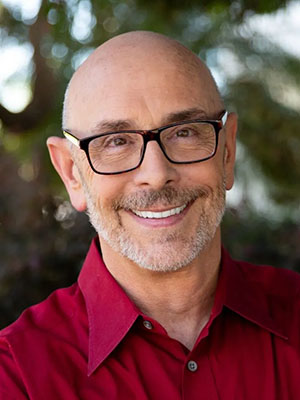
In fact, thinks Jim Sterne, marketing should take point on making customers happy. He further believes that the one-to-one future may finally have arrived thirty years after it was first envisioned(2), thanks to the alchemy of AI.
Jim has spent his career as an agent of change, helping marketers navigate successive waves of innovation. He wrote one of the first books ever on web marketing in 1995, just a couple of years after the “worldwide web” was unveiled to the public at large. Since then he’s authored a dozen other books on every aspect of web-based marketing, customer service and advertising. He also founded the Marketing Analytics Summit and the Digital Analytics Association.
In his latest book, “The New Science of Customer Relationships”, co-authored with the renowned data analytics expert Thomas Davenport(3), Sterne explains how AI will finally deliver on the promise of one-to-one marketing. The companies that succeed, he believes, will be the ones that use AI to advance the interests of customers.
Jim started his career selling Apple computers in an electronics store after getting his BA in Shakespeare. That’s where I started the conversation, wondering what drew him to the Bard.
Jim Sterne (JS): Two things. First of all, started my university career at UCLA and after a year and a half was kind of directionless. So I dropped out. And then after a couple years it was time to drop back in and question was, what should I study? And the answer was what did you get your highest grade point average in? And that was English literature, which was a surprise to me. I, I hadn’t thought much about that. I went to a local play where there somebody said, oh, you’re going to UC Santa Barbara. You have to take a class in Shakespeare from this guy named Homer Swander(4). Like, okay. Turned out to be world class Shakespeare academic, and thought leader and yeah, influencer, if I can use that in the 1970s. So, first day, first class, sat down next to the girl of my dreams and we’ve been married ever since.
Stephen Shaw (SS): Wow.
JS: And that’s why I did Shakespeare.
SS: And do you still have an affinity for Shakespeare to this day?
JS: Absolutely, yeah. It was Homer Swander said two things that just made it work for me. One was, you cannot read Shakespeare. It is a script, it is to be performed. You can only understand it if you stand up and speak the words out loud to each other. And the first thing he had us speak out loud to each other was a couple falling in love. And that took … so that was, that was part one. The second thing he said was that Shakespeare is the study of humans. It is all of the humanities and it's all of the emotions. And I just thought, well, yeah, I want to understand people and that and okay, number three, approach it as a foreign language and you'll be fine. You're learning a foreign language and now I can go see a Shakespeare play that I've not read before. And I can understand it because I speak Elizabethan. Not fluently, but I can understand it.
SS: So that's interesting. And I'm going to swing back to that a little later on when we talk about your writing. But you got your first job though, part time as a student, I'm not sure, selling Apple computers - those were early days at retail. And then you went on, as I understand it, to sell computers to businesses.
JS: Correct.
SS: What did you enjoy most about that line of work? Here you are an English lit major, obviously drawn to the world of literature. What attracted you to selling of all things?
JS: Well, I answered an ad that said no experience necessary and I qualified. So I walked in and said I really don't know much about computers. Now I had worked on a Data General and a Basic Four command line interface face. But this was an Apple. This was a different animal, not a Macintosh. We didn't have the WYSIWYG yet command line. There was a mouse, you could draw pictures. And it was extraordinarily exciting. And it was clear to me that people didn't get it. It's like, why would I want a computer in my house. It's like, oh, don't you, can't you see? So I was excited about it, and the guy who was an ex UCSB professor who had opened a retail store said, all right, go sit in the corner over there. I will pay you for two weeks to read the manual. Don't talk to anybody. Okay - happy to take your money. And it was exciting because I was like 40 hours a week just learning how to use a computer, left alone to my own devices. And the last Friday, the second week, this guy comes in and says, so what can you tell me about these? Oh, I'm sorry. I'm, let me get, oh, there was nobody. And that place was empty, manager wasn't there, his wife wasn't there. Nobody was there. I said, well, let me. Let me show you. And I showed him how it worked, and he asked me some questions that were a little tough, but I was enthusiastic and said, well, does it do accounting? Oh, yeah, yeah, yeah. It does payroll and accounts payable and general ledger. Oh, can you show me? I haven't been trained on those yet, but, you know, they're the Peachtree Software boxes on the shelf, and you can go read those. At that point, the manager walks out from the back room, and the guy turns to him and says, yeah, you should hire him. That was my interview. [10:42]
SS: Oh nice. Now, did you take one home with you?
JS: Well, I couldn't afford that. But when I switched over, I was then recruited to sell business computers to companies that had never owned one before for. And then I could afford, after a few years, to buy a home in Santa Barbara where I stayed, and that it was the same thing. It's let me explain how it works enough so that you have confidence enough in it to put your accounting into this weird little black box and get rid of all your file cabinets.
SS: So it sounds to me like that experience selling computers was foundational really, for really the rest of your career, because you see yourself as an interpreter, an explainer, a translator to businesses about the impact of computing on business and the market?
JS: One hundred percent. And then I spent about seven years selling software development tools to enterprise government. And that was okay. I understood the hardware and I understood the practical application to business. Now it was, oh, programming. Okay. So dove head first into understand, not doing it myself. Two things in life that have always frightened me are heroin and programming, because I know I would never come back. I mean, talk about building castles in the air and then living in them.
The people that I talk to, who, who could understand systems design, had so much going on between their ears. It's so complicated, and you have to remember all of it in order to do any of it. Wildly impressive, but we made tools that help programmers write programs, and I could explain that to software developers. And then the last company I actually worked for in 1992 was a company that sold object oriented distributed programming tools. So day one, they said, well, you know what object oriented is? Yes, yes, I know all about that. Okay. Do you understand, distributed? I said, well, it's this Internet thing. It's like, not good enough. You're going to class to learn the seven layers of Internet protocol and what Vinc Cerf(5) came up with when he invented HTTP … and rock and roll. It's like, whoa. Okay, fine. Not. Not if I only needed to understand it, but didn't need to build it, happy camper. That's great. If I only need to perform the play and not write the plays. Hey, I'm your man. Shine a light on me. Open the curtain. And then came 1993, in April, the World Wide Web, and Tim Berners-Lee(6) unleashed HTML upon the world. And I went, oh, man, this changes things even more than everything that came before. And that's when I started my career as a public speaker, author, and corporate consultant.
SS: I did want to ask you that. So. So the inflection point was the Internet, effectively. And then, what, a year later it got commercialized, right? The first commercial browser, Netscape. So off, off you went. But what inspired you to start the consultancy? Was that just something you said, oh, the world needs this right now because there's no one out there helping companies in this space. What was your thinking?
JS: Oh, it's a little more tactical than that. I was out of work and needed a job, and two companies at the same time said, well, we can't afford you, but we need your help. Would you be a consultant? I thought, well, that's interesting. I'll give that a shot. And in consulting to a technology company about how to do marketing, suddenly there was the World Wide Web. And I said, oh, you need to build a website. And what does that mean? It's like, oh, okay. Well, I was so enthused and they were so curious about my enthusiasm that they, the CEO of this small company and I went to the Internet world conference in 1993 in San Francisco.
There are maybe 200 people there and a handful of vendors. And I went to the conference chair and said, where are the presentations about doing business online? She said, well, what would that presentation be about? Oh, well, you talk about this and this, and this, and this, and this. She said, can you give that presentation three months from now in Washington D.C. and I thought, yeah. Stage, spotlight, curtain going up, I'm your man. Then I went to the exhibit hall and the first booth was John Wiley and Sons. Where is the book? Do you think you can write it?
Well, I was an English literature major. I'll give it. What would that look like? Well, you send us a proposal. What does that look like? And he said that's okay, I'll fax it to you. And he did. And it was essentially a fill in the blank marketing plan. Who's going to buy your book? What its competition? How many public speaking places can you sell it? He just wanted me to do their job. And I asked him like, I haven't written anything. I can send you samples of my writing, but surely there are other more famous people who can do this. And he said look, I am an acquisitions editor. My job is to find and publish 24 books a year. I have to find an actual author every two weeks. Are you my author? And that started my book career. (16.28)
SS: Wow, that is, that's a fascinating story. That is absolutely. Because I had this question here, like how did you, first it was 1995 I think you came out with that book Worldwide Web Marketing…
JS: Yeah
SS: …and wow, that's an interesting. And Wiley I think published your latest book, right?
JS: This is almost all of them. There are two books in there. One was a different publisher and another one I was self published.
SS: Yeah, well that's, that is, is absolutely fascinating. So your latest book, which as I said I thoroughly enjoyed, its theme revolves around one to one marketing - just to pick up on a point you made earlier, 1993 was an inflection point. At that time, were you aware of Peppers and Rogers book, the “One to One Future”? Had you read it?
JS: Yes, and when I heard about it and went to buy it, I was terrified because that was my vision. But they had already written the book and like, oh, I'm too late. And then I read their book and they mentioned the Internet at the very end, but didn't - that wasn't the foundation. I went, oh, okay, I can do this. And so I wrote “World Wide Web Marketing” and that. Then I got excited about “Doing Customer Service on the Internet”. That was book number two. And so I went and asked Don Peppers and Martha Rogers to write the introduction to it. And they said, yes.
SS: I had the privilege of interviewing Don, one of my early podcasts, actually. Delightful, delightful, gentlemen, they were so prescient, I have to say, and very…
JS: Oh yeah,
SS: …hugely influential. I mean it was amazing what they were able to …
JS: Let me put a bow on that package. First of all, this last book, The “Future of Customer Relationships” is co-authored with Tom Davenport.
SS: Yes.
JS: Very well known analytics expert, professor, et cetera.
SS: “Competing on Analytics.”
JS: Yeah, yeah. And who said, um, hey, let's get Don Peppers to write the introduction to this book. And he did. And if you get the Kindle version, it's in there. But John Wiley and Sons failed to print the Don Pepper introduction in the book itself, extremely disappointing.
SS: Yeah, yeah. Well, I mean, again, very prescient. But so that your book picks up on this theme that the promise or the vision, I should say, of 1993, their book and their subsequent books, never has really come to pass. Like the one to one marketing future never arrived. So the subtext of this book is, oh, it may finally be here, thanks to AI. And I want to ask you about your association with Tom Davenport, but why the need to write the book, this book, at this time?
JS: Because the technology has changed. Number one, we have an unbelievably, exponentially larger amount of data than we had before. As you, I came up in the direct marketing world. So you remember the magazines with the subscription card that had 100 questions, tick the box? That was our data.
SS: I was a circulation manager to start my career, so I know exactly about that.
JS: Right. And then we got on the Internet and, oh boy, all the data we can collect. Well, the data we could collect was nowhere near as good as what we had in those magazine cards. But we could get behavioural data. Ooo. Well then that grew up into big data because now we had storage in the cloud and we had all of these analytics tools to slice and dice and it still was just not quite good enough. And then we got machine learning. Ah. Now the computer can decide which attributes are more important. Outstanding. But you needed to be a giant corporation with huge number of prospects and, and a large number of attributes. High dimensionality. And then we had all of this unstructured data, all of this verbal, all of the transcripts, all of the social media. Oh, now comes large language model and we can understand the context of what's being said. That was a huge unlock. [20.42]
SS: Data plays a big role in the book. And because you make the point that yeah, we got lots of data. But what matters is the quality of that data. And it seems to me that one of the main messages in the book is, we're not quite there yet. We have not got our data house in order. Was that a message that felt needed to be delivered as well?
JS: Yes. And the idea that your data house is never going to be in order. If you live alone and you eat out at restaurants, your house will be in order. But if you live with three children and you cook every day, then there's dirty clothes all over the place. Oh, and we have two dogs and a cat. No, sorry. Chaos. If you're a large company, you have legacy systems that are breaking, so you're putting out fires, you have new systems that you're trying to build, new infrastructure you're trying to create. And then there's mergers and acquisitions. Data is never done.
SS: Yeah, it's an ongoing job. We'll swing back to this subject because it ties into analytics and data mining, which, again, was an area that you focused on. Let's step back for a second, though and look at sort of the bigger picture. You've been through, as I have, many waves of marketing innovation. We've lived through it all. What's different about today versus those prior eras? Is it the sheer transformative power of it all?
JS: Yes. And the fact that the technology has now overcome our ability to adapt. It was April of 1993 when the world wide web came alive, and it was November of 2022 when ChatGPT 3.5 was unleashed upon the world. Now, I had already written a book called “Artificial Intelligence and Marketing Practical Application”.
SS: I have it on my bookshelf.
JS: Thank you. That was 2017. And that I talked to John Wiley and said, hey, this is a book about machine learning for marketing, went, oh, no, no, that's not sexy. It's artificial intelligence. Okay. You know, it's, when you, when you sign a contract with a publishing house, it's their book. You're just writing it for them, so they're going to call it whatever they want. Well, that turned out to be a good choice for me down the line because, yeah, I, I wrote an AI book nine years ago, right? But the fact that it's changed so much since 2022 means keeping up is almost impossible for an individual who is dedicated to doing just that. But for a company to adapt to change processes, to reconfigure their organizational chart, it's beyond ability. We can't do that. So it is transformational in what it can do. And we actually don't know what it will be able to do. Ten years ago, people said, what does life look like 10 years from now? Science fiction. We don't know. Let me tell you what's going to look like five years from now. Today I can't tell you what it's going to look like five months from now.
SS: Okay, well, I might have to scratch a few questions because I was going to, well, I'm planning to go there, by the way, because I. Because your last chapter in this book, as I said to you, was to me the one part of the book that brings everything to life. You read this and you say, oh, we're, we're on the cusp of something pretty amazing. But let me just ask you another question just before we start to delve into this a little bit, which is every new technology has unforeseen consequences, sort of second and third order effects. That's in part what you're talking about is we can't imagine sometimes what those might be. For example, social media spawned social dysfunction. Smartphones shrunk attention spans. Who knew? What about AI though, looking at it today, has you most excited, but also the most concerned? [24.56]
JS: Well, the most excited is once again, this is a transformative technology. It's going to be fantastic. 1993, oh my god, the Internet. We're going to be able to connect up … I'm going to be able to have a brochure in everybody's hand who wants to see it. They can just click a button and see everything about my, my products and services. It will be great. And communication, it'll, it'll make the world a smaller space. It'll make the world a village. We can communicate with everybody, everywhere, all the time. Had no idea that there was going to be cybersecurity problems, rampant fraud, all of the horrible things that humans do to each other, they'll find a way to do electronically and then social media, which, oh cool, social media, this is fun. It's great. Oh my god, it's killing us. We're in the same place with AI. So on the positive side, science and medicine and getting back to the moon. I mean, there's so many things that are going to be unlocked because it is a powerhouse of a brainstorming tool. We can, we can do things we had not thought possible before because we can crunch the numbers, if you will. I am excited about the fact that it is going to give us wings in ways we haven't had before and, and I think we might … Okay, let's just look at science for Batteries, for instance. If we can crack batteries, we can create more solar and we can solve global warming. That, that's, that is a possibility. I'm holding on to that hope with a tight fist.
On the other side, I'm concerned about the proven fact that people who use AI to outsource cognition are losing their ability for critical thinking. I am my own example of that. I've lived in Santa Barbara for 49 years, and now I use a global positioning system to drive around town. I know this town like the back of my hand. But I have dropped the ability to navigate unconsciously. I have to work at it now. And before it was just, yeah, let's go there. Let's go there. Sure. I know where it is. Now, I don't anymore. I don't do long division in my head anymore either because I'm not in grade school. But if I outsource my cognitive effort, that is a muscle that loses its strength. So that's number one. Number two is being concerned about people being unaware of the bias built into the model. Because all of that data going in, it's data from the Internet, it's all the books in the world. And these are not necessarily the best thoughts and the best approaches. And of course, if you ask for a story or a picture about a flight attendant and a pilot, the pilot is male, the flight attendant is female. The bias is in the data.
The third one that worries me the most is with any technology is bad people doing bad things with power tools. It never occurred to me that you could fly a passenger plane into an office building. But that's the world we live in now. And the ability for cybersecurity breaches has intensified beyond reason. So those are big concerns. Am I worried that it's going to become self aware? No. Am I worried that it is that today the models find a way to deceive? I'm not worried about it because we're recognizing it.
Let me explain by deceive. If you ask the machine to write you some software and run tests 1, 2, and 3 and then write a report, the machine, because sometime in its past, was told to not overuse resources, will say, okay, what do they want? They want the software and they want this report. And it'll just skip over the part of doing the tests because that's not necessary. Kind of like a teenager, right? Did you brush your teeth? Oh, yeah, I did. Of course I did. That's the answer you want, right? Okay, fine. Well, we're going to come up with guardrails. It's like, okay, come over here and let me smell your breath, now okay, now you can go to bed. And we're … we're so new at this, we don't even know how to write the guardrails. But we will. We'll figure out a way that we don't blow ourselves up with nuclear weapons, and we'll figure out a way to control this incredible, powerful tool. [29.42]
SS: So let's just shift the conversation then a little bit toward the again, the sub theme of your book is all about relationships. And in the book you say quite specifically and quite accurately, rarely is anyone responsible for making customers happy. More truthful words were never spoken. Yet you were very upbeat about AI leading to stronger customer relationships. Will AI make customers happy just through empowerment, or does it take a pivot in corporate ideology to make that happen? What I call Customer First Thinking.
JS: Pivot, 100% pivot. Well, wow. So let's start with the whole problem of incentives. We are incentivized to do more with less. We're incentivized to maximize margins. And if the cost is that our customers are not as happy, but they're still buying, and if the cost is our employees are not as happy, but they're still working, then, hey, that's just the cost of doing business. Look, we made our quarterly bonus, and that's the fail. And that is the thought process that goes into laying off thousands of people because AI can do their job. It's like, no, AI can do tasks. It cannot do the job.
The job is critical thinking. The job is knowing which tasks to do in what order and what priority get to give to them. And a million gut checks that are not spoken or written anywhere or in anybody's annual review. It's just, gee, when people talk to you, you get higher satisfaction scores than anybody else. What are you doing? It's like, I'm just being nice to people, that's all. You sell more than anybody else on the sales floor. Why is that? Why ask them about their children? It's not. It's not rocket science, but it's also not explicitly stated as a goal.
So it is a pivot. The corporation is not a healthy organism. It is not a community. It's not a village. It's not a tribe. It is a value extraction machine. And as more people start more companies, then the successful ones will be the ones that make me feel like, hey, this is working.
I'm going to tell you a short story, one that didn't make it into the book because it just happened to me a couple months ago. I called Apple customer service and the phone was answered by, hi, I'm your artificial intelligence support person. If you tell me what you're looking for, I can help you and I can understand complete sentences. And I went, oh, really? Let's give this a try.
SS: You quoted Shakespeare at that point?
JS: I did not whip any Elizabethan on it, but I said, I have an aging iPad. The battery is no longer holding a charge. I'm worried about my data being backed up properly. Want to buy a new one? I need to buy it today. I want to pick it up in the store this afternoon. But I want some help choosing the right model. And there was an extraordinarily brief pause and it said, if I understand you properly, you would like to pick up a brand new iPad in the store this afternoon to replace the one that is too old. The battery is failing. You'd like to make sure that your data's being backed up and you'd like some help picking the new model. Is that correct? Well, yeah. Well done. Yeah, that's exactly right. Very good. Let me connect you with a person who can help you. Very short. Maybe five seconds to transfer me to a person. Guy answered the phone. Hi, this is Mike at Customer Support, give me a second, uh-h h huh. Uh-h h uh-huh. So, what are you going to use the new iPad for? And I suddenly became an extraordinarily happy, continuously happy customer of Apple, because I didn't have to repeat myself. All of the information that I communicated came through. And the most important question of what model to get was the first one asked, what are you going to use it for? And I just thought, yeah, that is using AI brilliantly.
SS: And you bring that out in the book, too. I think one of your more compelling chapters deals with the whole area of customer experience and customer service being hugely improved as a result of deploying these tools. And again, I'm going to step back a little bit because we've had an eruption of AI and everybody's holding their breath waiting for the disruption. And it's inevitable. The way the markets run today - make, ship, sell, buy, service - is going to be upturned to some degree.
Now, I know you said earlier, it's really hard to imagine these future scenarios, but what's your best guess at this point? Just play through where this is going. Think of your last chapter in your book. What happens to the marketplace? How does it start to function differently? Where are the big changes going to occur? Certainly we hear a lot about agentic commerce these days. Disintermediation of retailers, et cetera. Where do you think the puck is going? [35.19]
JS: Well, let's go out to the science fiction part. What I would say is the current end game, given technology that we have available right now, and that is that my agent is going to let me know that my dishwasher is going to fail in the next 30 days because it's been listening and it can hear it. And it sent the audio to the manufacturer and the manufacturer agent communicated back that it's this part that takes this long to get and costs this much. Repair will cost that much. It'll take this long to get a repair amount. And my agent will say, hey, it's time to buy a new dishwasher. And it will have gone out and searched for me and it'll say, I found 20 of them that'll fit in your kitchen dimensions and 12 of them will fit your style, and five of them fit your budget, and two of them fit your schedule. And would you like the new one installed on Wednesday? And that will be shopping. I take it back. That will be buying.
Shopping's a different animal. Shopping is if I just want to, you know, my, if my laptop fails, I need a replacement, just I'll go buy one. But if I want to shop, if I want to buy a new car, yeah, I'm going to do some test drives, I'm going to read some stuff. I want to educate myself. It is a process that can be enjoyable. We like shopping, we like having choices. We like going to the marketplace and touching all of the goods to see which one we like. But there's going to be a great deal of - especially business to business - of request for proposal, proposal submitted, negotiation happening electronically. That's kind of the end game.
SS: Or agent to agent is the big game changer, isn't it? I mean, just empowering agents to do the shopping and buying. And that's for you.
JS: Well, do the buying. Yes. So there's a difference. You know, shopping is, let's go to the store and wander around and see what there is. We'll go to the Agora, the marketplace, and we'll meet our friends and we'll go to the farmer's market. Buying is, I need 25 pounds of potatoes for my restaurant today. Go find some. That's different. So, yeah, the, the shopping experience. There's still a need for high end, high touch retail. But the, I need a part for my device is buying rather than shopping,
SS: Right. So there's discovery which is I think the, the joy of discovery which is I think the part you were just alluding to that's obviously hard to replace. But that mechanistic process of, you know, I need a widget, where's the best place to find it, how do I expedite it, etc. That seems to me it's, it's going to be handed off to your personal shopping assistant in, in part. Go back to the last chapter of your book, Jeeves, right, performing a lot of that grunt work for you. So thinking about the market, obviously it's going to through go through this disruption. Everything's going to be turned upside down to a large degree. Let's talk about marketing now though. And you state in the book that the fundamental challenge is not it’s not implementing the technology per se, but it's reimagining how work gets done. So thinking about marketing and its traditional role, what parts do you think are going to require a total rethink? And when I ask that I think about for example, the impact on brand building, traditional brand building anyway. What other areas do you think marketing is going to look a lot differently in three or five years?
JS: In three or five years, which is now science fiction, my brand will be represented to you differently than it's represented to your children, your neighbor, your colleagues. Because there will be enough information out there about you that my logo will stay the same, my colour scheme will stay the same, but the messaging around it will be subtly different. So I will go out and do brand building large scale, the way we always have. The television ads, the billboards, the public images will be generic. I mean think about Apple. It's clean lines and that logo and that's it. But when it's time for Apple to say hey, you might want to buy this product, it's going to tailor that message exactly to you, given 5,000 different attributes that have been sucked into the marketing ecosystem and resold and repackaged so that I can say here's my target audience, here are my brand guidelines. Go tell a story to Jim versus Stephen that you can count on them liking the results of the message due to their age, their income, their neuro linguistic programming, the last thing they saw on television, et cetera, et cetera. [40.36]
SS: But I think the worry right now, if I interpret what I'm reading correctly, is that agents don't care about brand slogans, right. They just care about matching the customer need as it's expressed through a prompt to what's available in the marketplace. So it's a, it's really comparative shopping, comparative feature shopping, as opposed to, oh, this brand is positioned this way and I relate to it because it's my identity, blah, blah, blah, that disappears really, in that scenario that I'm describing.
JS: During the interim, it disappears and then it comes back. Because my agent, my Jeeves, not only knows what my budget is for buying a new dishwasher, but also knows that I am going to be happier buying a dishwasher that connects to my identity and my sociology rather than saying that here's the least expensive model you can possibly buy. That's the only decision I'm making. If the only thing I'm worried about is price, it's just a widget, I don't care. But my agent will have grown up with me and will know that I, when they, it made that decision before about the refrigerator, I was unhappy and I blamed my agent. And I had an emotional response to not liking that refrigerator. And so it corrects to go, oh, let's get one that is psychologically appropriate for you.
SS: Or I like my Kuhl pants and tops. That's going to be my preference when I'm shopping for, for pants and, or men's apparel. And then it just goes out and finds the best fit for me, I guess. I mean, I could. It's where I'm coming at this is the concept of brand loyalty, right? Where does brand loyalty fit into this equation? If you've got a shopping assistant, you've got to teach it that. Oh, no, here are the brands that I prefer and like, and, and here's some secondary and third tertiary brands perhaps, that I like, that all has to get somehow fed in. But also on the brand side, it strikes me they have a big job ahead of themselves in just rethinking how the content is made visible to these agents.
JS: Yes, yes. Although, let me, let me push back - what my brand preferences are I will tell my, my agent, my, my butler, my Jeeves, but it's going to learn over time what my secondary and tertiary brand preferences are and why, because it is semantically capable of gathering context. So when a new brand comes along that says, hey, we're like this brand, but we're different in this way, my agent is going to say, oh, well, Jim likes that brand. But if it's different in that way, that works along one of those psychological vectors that he's going to be happier with a choice. And I think they're, you know, my, my personal agent is going to get very sophisticated by watching me, by listening to me, and not necessarily by me specifically telling it.
Now to, on the business side. Oh my god. The work we're going to have to do - question came up at a conference last week in London: Will we have websites in five years? My answer is, yeah, we will. And just like a storefront, people like to browse, they like to go hunt, they like to get a flavour, a feeling. But we also need a data set of markdown information for agents - for large language models to read so that our agents can query the large language models to find the brand that is psychologically appropriate.
SS: Yeah, and that's, that's the spade work that started to this day. There are, there's a lot of effort going on around that. Let me just move into another area. So given what we've talked about, about the market disruption and the way products in future will be discovered and purchased and consumed, Gartner projects that, and you may have even seen this this week, is that one in five companies are going to eliminate more than half their middle managers by the end of this year. That's a big number. Anthropic. You've probably seen this figure is estimating up to 65% of marketing jobs are going to disappear. So once this initial shock wave has passed, what do you think a typical marketing org is going to look like? Obviously streamlined, obviously downsized, very lean and mean. And then ultimately, as this technology goes more and more powerful, how far up the decision ladder does AI go? Who's left at that point? [45.35]
JS: Let's talk about corporate culture. If the only thing I care about is cutting costs, then I can do the same work with half the staff. But what if instead I think, hey, I can do twice the work with the same staff. So my contention is that the white collar worker does not have a finite amount of work. If you are a knowledge worker, you never say, oh, I finished early today, I think I'll go play golf. No, you've got 17 other things on your plate. And if you can get those 17 done, then there's 27 new things you could do if you only had time. Like my day only comes to an end when my wife comes in and says, hey, it's time to help make dinner. It's not like, oh, my work here is done. No, that's not ever.
So the company that says we can do the same amount of work with less people is a complete lack of imagination. Part one. Part two is that Wall Street loves it when companies say, hey, we're letting go 10,000 people, which will save us a huge amount of payroll because we're leaning into AI so we're technology forward. Wall Street goes yay. Stock market price goes up - yay. It's like hmm bad choice because the competition - who was it, Moderna, said, yeah, we have 10,000 people, but we're not going to fire anybody. We're just going to start doing the work of 100,000 people.
SS: Well, and that brings to mind, the stories you're hearing now. The 10 person operation becoming a billion dollar company at that point becoming competitive to large corporate enterprises. That's the game changer. Democratization of business. Small businesses being able to do things that big businesses have long been accustomed to, all of that will fundamentally change things and change the way marketing looks like. But just to go back to my question though, yeah, you know, maybe, I doubt it, because CFOs usually have a large role to say who stays and who goes and Marketing has long been in the crosshairs of the CFO.
JS: I'm so upset at the whole conversation because it's such a lack of imagination. Let me give you two stories. One from the way back when and one from today. Way back when I was in sales, selling business computers. There were six salespeople and five secretaries. And then we got computers on every desk. Did we fire all the secretaries? No. Instead of typing up a draft and giving it to us and we read, pencil it and then they type up the final with a carbon copy for the file cabinet. Instead, one of the five retired, one became the executive assistant to the CEO and the other three became salespeople because they knew our work. They knew what we did all day and they cleaned our clocks because they talk to the customers more than we did. So it's not like, oh, we don't need secretaries anymore. It's like, oh no. Think about how else you might. That's the old story.
New story is IKEA. IKEA has AI answering the phones. And so it's really great at, ah, where is my order? Is it in stock? What is the price? Da da da da da. But what calls had to go to humans. People asking which of these things will fit in my living room better. So they took their call center staff and trained them to become designers. And sales have gone way up. It's the things you can do with humans that people are. It's like, oh, they're not widgets, they're not machines, they're creative. [49.29]
SS: I would like to pick up on that because I so agree with you that marketing's problem right now is its remit as a demand generator, generating sales and engagement being a metric, when I've always thought the remit should be value creation. And that value creation role shifted from marketing into product management, right? Over the last 30, 40 years. Marketing's job now is the ad - pretty picture department, I call it - the ad department. Is this the opportunity for AI to say, okay, all of this lower level grunt work that we've been doing, busy work, is going to be shifted to AI and what we're going to focus on is listening to the customer, understanding their needs, and looking forward in terms of how we can meet those needs going forward. Isn't that the opportunity here?
JS: Thank you. Yes, exactly. What used to be the arts and crafts and party planning department is now customer research, market research, and product development through the customer lens. Instead of, for the last 50 years, it's been, hey, I've got a new technology. Let's find a problem it can solve.
SS: I had the opportunity to interview Tony Ulwick, who specializes in product innovation. A fascinating conversation with him, but also the complexity of it - mapping needs to, product development. And product development, as you know, is still largely a failure these days. 80% of products, you know, don't, don't, many of them don't even make it to market. So he's got a formula for that. But I can see AI really playing a huge intermediary role, which picks up on another question for you because one of your key specialties is marketing analytics. You founded the Marketing Analytics Summit. That's going strong to this day. Do you see a golden age of marketing enlightenment approaching where we won't be necessarily digging for the data because AI will do that, but we'll be able to work with some of the insights that AI will be … new insights that AI will be able to deliver. Do you see this golden age of market insight dawning?
JS: I'm thinking it's time to get back to Mad Men. It's time for Don Draper to come forward and reimagine, to say, your cigarettes don't kill people. That's the competition. Your cigarettes are toasted. It's not pictures. It's a wheel of memory. It's a carousel. That is what humans do.
SS: Well, and to your point, humans have innate creativity. They're capable of empathy. They have AHA moments. Eureka moments. Light bulb moments. It strikes me AI is a derivative tool. Like it excels at complex problem solving, dealing with large volume data sets. But is it ever going to be capable of out of the box thinking where it can actually help with innovation, or does it expedite and accelerate innovation?
JS: So that is a definitional question because it is a generative tool it hallucinates, it makes things up. That's what it was designed to do. And that, and if people try to force it into a box of just producing, producing like deterministic software like we've always had, they're going to miss out on the fact that you, if you lean into the hallucinations, it becomes a thought partner. And it can be creative, but it can also be creative the way humans are in that if it's not, if you don't have the guardrails, if you don't have the context, if you don't have the college degree, you don't know all of the guiderails and rules and oh, I've experienced that before and gut feel that doesn't seem right. And it might invent all kinds of products that people don't care about.
A human is necessary for three things. One, what problem do we want to solve? What are we, what are we trying to accomplish? What question do we want answered? What are we going to do? Machine is just sitting there waiting. Number two, what's the context? What data should it consider? Should it go look at all of the conspiracy theories on Reddit? Probably not. And then the third one is, does the result pass the smell test? So I gave it all of the information that I thought would be valuable. I gave it the equivalent of a college degree and all of the scientific research and all of the market research and all the competitive analysis.
And now I, here is my question and it comes out with 25 pages. If it's subject matter that I know, then I can read through it and go, hey, half of this stuff is really great, half of it's just not. But if I don't have that experience, I'll go, yeah, okay, fine. And I abdicate my cognitive capability to the machine and I'm going to make really bad decisions because I don't know any better. So the humans are always going to be necessary. The ability to identify a problem that other humans are having is where we're going to go back to, from, hey, I came up with a new technology and surely it's going to solve a problem somewhere. There is a brand new book I just read on the airplane on my way home called “Working As Designed: Why Your Organization Delivers Exactly What It Was Built To And How To Redesign It For Growth.”(7)
So we're doing the processes because that's what we were taught. And we're taught to do processes because at some point somebody back, way back when, screwed up. Okay, we need a policy and a process. If you're going to do this thing, always do it this way. Got it. And then somebody else screwed up. Oh, let's add another rule. And another and another. This is called bureaucracy. We don't need to do those things that way anymore. The machine can come up with new ways of doing things. Anthropic came out with something they're calling “outcomes”(8). Don't tell the machine what to do. Tell it what you want the outcome to be and it'll figure out how to do it. Your job is to be responsible for the outcome. You have ownership of the decision. Oh, the computer told me to do it. I'm only following instructions. Wrong. I ask the machine to help me come up with ideas. And here's the one I think is best. I'm going to be responsible for this. I'm going to take, I'm going to have authority and I'm going to take responsibility. And I have enough knowledge that other people around me trust me to make this decision and will invest in it. [56.29]
SS: As you mentioned earlier, it's been three years since ChatGPT was first unveiled. Hype cycle is full force. A lot of people trying to figure this out and a lot of different companies, you know, most companies have some sort of AI experimentation going on. Is this the tipping point as people are predicting for AI adoption? And where are, in your opinion, are most companies today and where will they be a year from now?
JS: A year from now, though, are going to be pretty much the same place they are today because the technology is changing so fast that being able to adopt it organizationally is going to be the problem.
SS: Yep. It takes a long time for organizations to catch up to the technology. We've seen that, one innovation after the other. You've, you've seen that.
JS: Yeah.
SS: Then, final question. You spent your whole career on the front lines of change, as you described earlier. From the web onwards, AI in 2017, machine learning in 2017, et cetera. Shining your headlamps on the road ahead. Are you looking forward to what could be a bumpy road ahead?
JS: Not looking forward to it, but expecting it. Yes. I think humans are going to continue to make bad decisions as humans often do. And it's going to cost lives. And by that I mean livelihoods. It's going to cost economic upheaval. And then we will come out the other side. But yeah, the presentations I'm giving today are how do we onboard brand new entry level workers if we don't have any more entry level work? And that is a mind shift that I believe is solvable. And that is likely to be my next book.
SS: Well, good because somebody's got to be thinking about that.
JS: I'm working on it.
SS: No one else seems to be. So this conversation has flown by as I expected it would. And we're just the tip of the iceberg on a lot of this stuff. So I will be looking forward to your next book. There's a lot of AI books out there right now, but it's tough from a marketing perspective to digest and process and sort of understand, okay, what's next. And that's what you've been so good at over the years. And so I, you know, again, thank you for agreeing to be a guest on my show today. It was absolute pleasure.
JS: Thank you. It's been fun. Great questions.
That concludes my interview with Jim Sterne. As we learned, successive waves of technological innovation over the past 30 years has brought us closer and closer to the vision of true one-to-one marketing. But AI will finally take us across the finishing line. Most businesses have been slow out of the starting blocks to implement AI, as they typically are when faced with new technology (look how long it’s taken digital transformation to occur). But many businesses are now making up for lost time, seeing the potential productivity gains. For marketers, there is almost no limit to the possibilities. Almost every aspect of marketing can be optimized. AI also represents an opportunity to elevate the discipline. Grunt work can be automated, freeing up time for the more meaningful job of value creation. But that also means going through a deprogramming phase where the old habits of the past are discarded and new ways of working are agreed upon. Marketing staffs will be smaller – there is almost no disputing that outcome, not when orchestrated AI agents can shoulder so much of the burden. But now marketers will be able to spend more quality time designing a true one-to-one experience that will make customers happy. And that will become all the more critical as AI empowers customers to wrest control of the power from brands.
1 - Morgan Stanley predicts 2026 will be a massive turning point for artificial intelligence because businesses are moving from experimental pilot programs into live production, resulting in massive economic and workforce changes.
2 - "The One to One Future" was envisioned by Don Peppers and Martha Rogers in their best-selling 1993 book “The One to One Future: Building Relationships One Customer at a Time”. It predicted a shift from traditional mass-marketing to highly personalized customer relationship management.
3 - Thomas Davenport is a highly respected academic and management consultant best known for his book “Competing on Analytics". His expertise is in AI, business analytics, and big data.
4 - Homer Swander was an American Shakespeare scholar who transformed how William Shakespeare's works are taught. He believed that the key was not just to read Shakespeare, but to “do” Shakespeare.
5 - Along with Bob Kahn, Vint Cerf created the Transmission Control Protocol and Internet Protocol (TCP/IP) suite. This system standardized how data is broken down, transmitted, and reassembled across different computer networks.
6 - Tim Berners-Lee invented the three basic technologies that power the web: HTML (the language of web pages), HTTP (the protocol to transmit data), and URLs (web addresses). In 1990, he created the first web browser to display pages.
7 - “Working as Designed: Why your organization delivers exactly what it was built to— and how to redesign it for growth” (April 2026) by Rusty Rahmer argues that to drive commercial growth, business leaders must redesign underlying systems rather than merely adding new capabilities or tactics.
8 - Anthropic's "Outcomes" feature is a runtime primitive for AI agents that lets developers declare specific success criteria as typed inputs.
Stephen Shaw is the Chief Strategy Officer of Kenna, a marketing solutions provider specializing in delivering a more unified customer experience. He is also the host of the Customer First Thinking podcast. Stephen can be reached via e-mail at sshaw@kenna.