



Never before have so many people become as infatuated as quickly and as enthusiastically with an emerging technology as they have with AI.
According to one estimate, 66% of people now use AI regularly1. It has become an indispensable utility in their everyday lives. People use it to shop. To plan their travel holidays. To consult on health concerns. To manage their finances. To help with repairs. To interpret technical jargon. To manage and respond to e-mails. To plan dinner. To organize their day. Even to serve as a confident and friend.
All of this adds up to an historic inflection point in the market. AI is influencing how people discover, compare, and buy products and services. It has already upended search marketing. It has disrupted the way brands are discovered. It has turned the marketing funnel upside down. It has drained away web site traffic. It has neutered the power of brands to influence consumer choice. It has made prices fully transparent. Most of all, it has raised the expectations of customers to new heights.
Suddenly the old marketing playbooks have become relics of a bygone era when brands were more or less in control of their destiny. Marketers are now faced with reinventing the way brands go to market. But it is not yet clear that very many brands – especially me-too brands most at risk – grasp the full extent of the threat. Instead marketers are caught up in merely using AI to compress campaign timelines and workflows. Understandably so: they spend more than half their time today on tedious and repetitive production work. CMOs who can automate routine execution tasks and trim headcount are always seen as heroes by their bosses.
Marketers can now push out more campaigns in less time with fewer resources across more channels with more precise aim. But they are falling short in harnessing the full power of AI to reimagine the customer experience. Which is why so many AI pilot projects fail to scale. AI is just plugged into current ways of doing things. Marketers just want to keep doing what they’ve always done – only faster – when what they really need to do is rethink processes from scratch. Instead of seeing AI as a way to free their time for more strategic visioning, they think of it as scab labour. So there is an enthusiasm gap that is holding back progress.
The other major stumbling block is a longstanding one that marketers can’t solve on their own. They are often stuck working with legacy systems and a mishmash of loosely connected marketing tools that are simply underpowered to cope with the demands of generative AI. Hyperpersonalization is an alluring concept – until it runs headlong into the sobering reality of stove piped systems and dirty data. What marketers really need – what they’ve always needed – is a unified customer data infrastructure and knowledge base – machine readable by AI – that they can trust.
Which is exactly what SalesForce has brought to market: an all-in-one enterprise solution called Agentforce that connects all of the requisite components in an integrated, AI-ready architecture. By implementing Agentforce marketers can jump start the deployment of agentic AI, sidestepping the perilous path of going it alone. There is always a lot of heavy lifting involved in taking a do-it-yourself custom-built approach, and often it does not end well, mainly because of messy, conflicting data and disconnected systems. Too many moving parts, too many chances for things to go sideways. Whereas with an interoperable, purpose built, tightly connected solution, especially one from a known vendor like Salesforce, the on-ramp is less steep.
Since its inception almost 30 years ago, when it pioneered the concept of cloud-based SFA software as a service, Salesforce has continued to push the boundaries of what’s possible. Its longtime market dominance in CRM gives it instant credibility and peace of mind with enterprise-size businesses looking to build a central operating system for agentic AI automation.
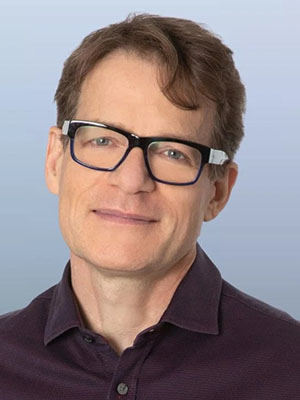
In his role as strategy lead for Salesforce’s Marketing Cloud, Martin Kihn is charged with explaining the advantages of using their platform. His gift is that he is able to translate technical jargon into plain language that marketers can easily understand. His two prior books pulled back the curtain on customer data infrastructure, building an aspirational picture for marketers of what their technology foundation should look like, from front to back end. In his newest book Agentforce, Martin Kihn lays out an evolutionary path for marketers to follow if they hope to harness the full power of agentic AI.
I started by asking Martin if he thought his real job was as Salesforce’s “Chief Explainer”.
Martin Kihn (MK): You know, it’s hard to figure out what our talents are in life and I think they emerge later. And because I look back on my career and I think, well, what was I good at all those years? And I think that’s exactly what it is. It’s taking something technical. And my approach to it is if I can get to a point where I understand it, which takes work, then I can explain it. And I think Richard Feynman2 said that. He’s like, if you can, if you can explain something to an eighth grader, then you really know it.
Stephen Shaw (SS): Right.
MK: And they understand it and they get it. So I try to explain how our products work and I try to do it in a way, and I feel almost anything can be understood, even AI, if it’s explained correctly, even very technical concepts can be understood. So that, that is my role.
SS: Which is the success, I think, of this latest work of yours. It does that exceedingly well. And of course we’re inundated these days with articles and white papers and consultancy reports and everything else on AI but piercing the technical fabric of it is another challenge. As I alluded to earlier, you had, you’ve written two other books3, “Customer Data Platforms” and in a similar vein – excellent at explaining a complex subject – and “Customer 360”, both of those are co-authored. This one you chose to write on your own. I’m just wondering what the thinking was behind that or why the change?
MK: I mean, I like working with Chris [O’Hara] and with Andrea [Chen Lin]. It's quicker, you work with someone else because I only write half the book and they, Chris and I actually, we just swapped chapters. It was very easy. Every other one was me and every other one was him. And then we kind of read them over at the end. With Andrea, it was a little more complex, but I, like, I actually wanted from beginning to end to have total control over this Agentforce book. I had an idea of what it would look like. I had a very tight time frame. There was no particular coauthor that, that I wanted to work with at that point. So I'm glad I did. I mean, and you know, it was my, I had ownership of it, so I could have different ideas. So I like working by myself as a writer.
SS: And I'm just curious about the process. When you're writing with somebody else, how do you synchronize the styles? Like Chris obviously has a writing style. You know, he wrote that book, I think, called “Data Driven”4. And you have a particular writing style. How do you meld the two so that it reads like one voice, not two?
MK: We don't really. With Customer 360, Andrea let me revise her part. So I changed it a bit. She had, like, she wrote in the first person in some places, so I made it more consistent. But you can still tell. I mean, if you're a careful reader, you can say, oh, this was done by a different person than the last chapter. And with Chris and I, yeah, I mean, we have different styles. I think you'd have to be perceptive to figure out who's who. But, it's true. But we didn't really make an effort to write the same way I think. What's really important to collaboration is having a really good outline. It's got to be extremely clear what each chapter has in it and what are the boundaries so that we don't repeat each other, or step over each other or that it doesn't hold together because it really is held together in the outline. So that was critical.
SS: Well, I don't mean to make this podcast a masterclass in book writing, but it is interesting to understand what's behind the scenes because there's some effort involved, and three books in a fairly short period of time is a big achievement. You've written other books in the past, obviously, “House of Lies”5 being obviously your most famous one. So you've been at Salesforce all this time - I don't know if it's the longest period you've been, you've worked for one enterprise, but you must feel right now that you're on the front lines of this revolution going on, and that in and of itself must be interesting. [10:02]
MK: It's, uh yeah, I mean, my job got more interesting, as you might expect, over the last year. For a while there I was talking about Customer Data Platform in the beginning when I joined actually, and it was very, it was very exciting. No one really knew what it was. We were defining a category. I was explaining how great this new technology was and people were discovering it, but it became more mature and about two years ago, I was repeating myself, saying the same things, and it kind of got a little lackluster. There was nothing that exciting going on other than incremental changes. And AI came along and we're like, oh, this is interesting. And it's just, it's progressed so quickly and it's having so many unpredictable impacts on different parts of the organization that I think it made marketers - because I talked to marketers and they're wondering about the future of marketing – and so now they're asking me, what is the future of marketing? And they really don't know. So I think my role just got a lot more interesting. I get to be more speculative.
SS: Well, that's going to lead me to a whole line of questioning on this interview, so be prepared. But let's start off with where the book starts off, which is quoting Mark Benioff calling this, quote, unquote, “a moment in time like we've never seen”. Now, a lot of people have likened this period, or this emerging era, to the emergence of the Internet in the 90s, mid to late 90s, early 2000s. You were in those formative years, arguably a pioneer in some respects, with Digitas, Fallon, I think, as well.
MK: Yeah.
SS: Having been there, lived it, now beginning to experience this era, how would you compare the two eras? Are they kind of the same, or is this going to be a significant turning point?
MK: I mean, I think there's more substance to this era. The Internet was absolutely revolutionary, but it took time. And the real impact didn't happen in the 90s. The real impact happened when we got the iPhone, which was 2009, whatever that was. And social networks, like when Facebook became a center of activity. And all these things were unpredictable though. I don't think anyone would have predicted the iPhone. We think we would have. But at the time - I was there - no one really would have predicted. And we thought, well, there might be a phone, but it's … we wouldn't think it's a little computer. And we wouldn't think we would be staring at it all day long. That, that was unpredictable.
And then social networks. I mean Zuckerberg was alone developing his social network. So it was … that's another one. So I think, that the, and, and you know, in the very beginning, like the 90s, there were companies that came … that appeared. Like there was one called Pets.com that did a lot of really funny ads, you may remember. And that's exactly the same business as Chewy.com today. Chewy is very successful - Pets.com was not. It bombed. And it's just because the tech wasn't there yet and people weren't comfortable giving their credit card. It just … the Internet was too slow.
So I think it was truly a bubble. It got ahead of itself. It took probably 10, 15 years to catch up to the hype. With AI, it's happening more quickly. I think there is hype. There definitely is. There's kind of an over expectation. But it's delivering quickly. I think the fact that these frontier models have developed coding agents so they can actually improve their own code and engineers just became more productive suddenly. So there's this, the release cycles have shortened, so I think that it's, I think AI is still ahead of itself a little bit, but it'll catch up more quickly. But I also, by the way, think that it's unpredictable. Like the real impact, the real businesses that emerge, the real revolutionary thoughts haven't really happened yet. Or if they have, we don't know about them yet.
SS: Yeah, but in the book you do concede that there will be disruption. And I think that's obviously a general acknowledgment, but to your point, no one knows the extent of that disruption. How will that play out? What are the unforeseen consequences? Back to your iPhone example, social media example. Marketing though is certainly acknowledged generally as being right in the crosshairs of this disruption. So much - and you mention it several times in the book - how much of it today can and will be and is being automated. So given your conversations with marketers and their requests of you to speculate on the future, what's your gut feel on this? Is this sort of the beginning of the end for marketing or is it the end of the beginning? Does marketing need to reinvent itself, I guess is the big question? [14.45]
MK: I mean it's, it's continually reinventing. I think the disruptive part is going to be more in our daily jobs. Like what we, what literally we - maybe not you and I - but in general what people do when they go in the office or when they, I guess, work from home. So … but there will be an impact there that the tool, it's already happened, like engineers now tell me that they don't write code anymore. They just give instructions. But they're still working. They're still kind of making sure things work. They're providing extremely detailed, it's almost like code, but it's in English, detailed Instructions to the coding agents and so on. But their workflow has changed a lot. I mean if you ask any of them, they'll say what they do today is nothing like what they did two years ago. I think that's going to be true with marketing as well. I think there's going to be a lot fewer people who are focused on individual channels and individual tools. Like you know, the Salesforce Admin, who knew email really well, there won't be any pointing and clicking really, a lot of that will be “agentified”. But the … you still have that person. That person then will be kind of given a promotion and they'll be managing a team of agents. So we'll all, we'll all be managers. I mean to some extent I suppose we are now if we have agents working for us.
But, so I think that's probably the difference. I think marketing is, it's more complicated, I shouldn't say this but between us, it's more complicated than like customer service and B2B sales and I think it's just because it's campaign related. The number of people you address is much greater than if you're a salesperson visiting companies. I think customer service is a lot more predictable. Apparently you know, 80% of calls to a retailer are either “Where's my order? Can I return this order?”. Extremely … so you can, you can identify and automate a lot of those processes more easily. And I've seen at Salesforce the sales team is all in on AI. They've automated a lot … customer service, we have a lot of people using Agentforce for customer service. Marketing not so much. And the reason is because marketing has a lot of pieces and they have to fit together. Like you have to create the campaign, you have to know the audience, you have to like, come up with the idea, you have to do the creative. Then you need a media plan. So it's not just one agent, it's many, many, many, many agents. We're getting better at it, but I think it's happening more slowly than people had expected.
SS: But back to the reinvention part. If AI is going to really work, it needs rethinking if you will, around not just obviously workflows but what's the role of marketing? And you think about marketing's traditional role has been hitched to the attention economy. And as we transition now to an Agentic Commerce economy where the consumer is using AI mediation to make decisions, all of a sudden marketing's role becomes a little murky, right? Because if you can't get the attention of people anymore through direct messaging and you're reliant on that agent to be interacting in between, what becomes the purpose of marketing? The enterprise becomes … I imagine the big question.
MK: Yeah, it's, I mean the, the goal of marketing is for a company to communicate with, like it's a kind of sales, basically it's a branch of sales. But communicate with consumers and persuade them that your product is the right one for them. That sounds easy, but it's not obviously. But I think marketing itself is going to, and we've already seen this, I think it's become more accountable to revenue. In the past it was difficult, but when I worked at, in my agency days we looked a lot at brand awareness just because that's the only thing we could really track. We would, we would have a TV spot or even banner ads and we'd say all right, did we raise awareness? Now that's not the same as did we sell anything? It can be quite far away from did we sell anything. But it was the best we could do.
I think we're getting to a time… for instance, I know there's Agentic Commerce now. So you know Visa, OpenAI, MasterCard, Agent Pay. There's a way to attach your payment to the agent experience. And then I know Doordash for instance, you can pre-authenticate in Doordash and then order food. So you're staying in the AI place but you're, it's a kind of a form of marketing because you're interacting with the brand and then you're, you're purchasing and you can, you can close that loop really easily. So you say this is what happened: They were in GPT and they did this and then they made a purchase. So it's clear what the role of whatever you're marketing or even if it's the paid sponsorship efforts were. So I think that it's, it's tight, it's become more accountable, it's much more, our customers are much more focused on ROI now and real attribution, not, not theoretical attribution. So I think that that trend is clear.
SS: Yeah, well, marketing is becoming more accountable for growth and if they can't prove …
MK: Yeah, yeah.
SS: … growth, then the CMO is not going to last very long.
MK: No, it's like upsell, it's like incremental revenue but also net new revenue.
SS: And more customers buying more, more often.
MK: That's right.
SS: Let me ask you about Salesforce. You know, I said Agentforce, operational for a while now, you're out there talking to companies that are at various stages of adoption and maturity. You know, everything I see would suggest that two thirds of companies still are laggards and way behind where they need to be, certainly far behind the leaders in this movement. What's the biggest mind shift from what you've seen to date in terms of AI being successful - what's the biggest mind shift companies have to make is my question, I guess? And the flip side of that is, where are most companies today going wrong with their AI deployments, from what you can observe? [20.29]
MK: There's two things I think. One is, AI is a tool. There's a lot of, kind of mystery, mystification and even resistance among some people. You know, marketers I speak to about, not only do they feel their job's threatened, but they, they are resistant because they feel like, well, I use it as a consumer and I it doesn't work, or I don't understand how it works or, believe it or not, I mean, a lot of people are into it, but a lot of people aren't. So I think that there's a certain level of resistance. It's a, it's a tool, and I don't think enough people see it that way. It's something that's supposed to make our lives easier. It's supposed to make us more efficient, more effective. But it's not something that is a cure all. It's not something where I can say, all right, I need AI to improve all my campaign workflows and just improve my marketing, and it'll be like magic. It doesn't work that way. It is a tool. It requires education, it requires implementation. It requires actually a lot more work than people think. So I would say just approach it the way you would any new technology. It's kind of more mundane, but it's sort of like, what can I do incrementally with AI? People are too focused now on the fear factor of I can do great things, but what is that going to do to my life, essentially? So just be more realistic about it.
SS: The only thing I've really read about it that suggests a pathway is that where companies are failing to get out of pilot mode and scale is that they're trying to fit AI into an existing workflow. This kind of was a CRM problem in the 90s too, if you recall. They're trying to fit it into an existing workflow rather than reinventing the workflow in order to accommodate now this far more powerful technology. Is that your sense of things?
MK: Yeah, I mean it is a different workflow. It also … AI agents require access to a different kind of data. They like unstructured data, like for instance, call center logs or the content that's on your site, like your videos and all the text and all that stuff is very useful if you're trying to generate content or come up with a campaign. But to make that data accessible to any system requires a sophisticated foundation. We talked before about customer data platform. Customer data platforms in the past few years have become vector databases where you can load unstructured content into them and … mostly text, but you know, more and more imagery and video and make it accessible to agents, and make it accessible to search. And so I think the data foundation itself is … a lot of customers that I talk to are stumbling over that still. It was always a problem but with agents it becomes a really big problem if they don't have their data … the customer profile unified. It's not as real time as possible. It's poorly documented and all the problems that people have. CDP is become you know, more important, I think.
SS: Well, I was gonna make that point that it's more important than ever to have a single source of truth to, to use that phrase. I want to stick with one more macro question before we dive into the detail around Agentforce and how it works, which is the book as I said earlier, does an excellent job of describing to the neophyte … but amongst the more advanced AI users, adopters if you will, within the Salesforce base … and you cover all the major areas, customer service and sales and marketing and so on … what kinds of real transformative changes are you beginning to see as a result of the adoption of AI?
MK: I think what we saw at first in customer service with Agentforce, the still, I think the majority of the use of Agentforce is around service. And what was interesting to me, and I'm not in the customer success area, but what was interesting to me is that it was used by customers, not, it would seem to be a more efficient way. Like if you can handle a complaint using an agent for $2 and it would cost you $11 on a phone call, then, oh great, so we can get rid of all our people and just use agents. And that isn't what's happened.
What's happened is people have added agents to the team in a way. So it's like the humans are doing what they did and then they add agents who are handling all of the work that basically didn't get done in the past. So people that were on hold and left or leads, like lead capture on the site. Most leads are just ignored. They're scored and then they're ignored. But a lot of those could become live leads again. So there was, there's just a lot of work that the companies couldn't do, marketers and service people couldn't do because they just didn't have enough people.
So the hybrid human agent workforce is real. I think it's interesting to figure out how to manage it. There's one customer we have. I think they talked about this at Dreamforce6, but remarkable they're like a pen, they're like a notebook company based in Europe and they measure the agents and the humans using Net Promoter Score. So they ask people to score them and then they assess the agents versus the humans. It's not a war, but it's basically they're trying to get the agents up to the level of people. And so I think that treating them as cohorts on the team is it's kind of what the vision would be. And I think that in reality is what I've seen. [26.05]
SS: So that's customer service. But what about on the sales, at this point, and marketing fronts? Where are you seeing true, significant, profound change?
MK: Well, definitely in the world of content creation, which is where GPT started. You know, we all got excited three years ago, GPT like, oh, it can write coherent sentences. Which was new because I .. that was GPT3 … I actually had used GPT2. I mentioned this in the book, not long before GPT3 came out and it didn't really work. I was trying to get it to do a Hallmark Christmas movie plot and I thought, wow, that should be pretty formulaic. But it couldn't do it. GPT3 was much better. GPT3 could do that pretty easily.
The fact that now … there was a study I saw recently where AI generated copy was, not only was it more persuasive than human generated copy, it was generated more quickly. And in fact, when they asked the person on the other end and told them it was AI generated, that didn't lower their appreciation for the ad. So people are accepting AI generated content in a way that I think we didn't predict. But it's … content creation mostly in the tech space, but also in imagery. Video is less mature than we think it is right now … it's like short, and it demos well, but it's not production ready.
SS: Well, I was talking to my brother as I mentioned, who has a post production house in Vancouver, works on the Hallmark movies as I mentioned, and he was describing a new tool he's using now that has dramatically improved his capabilities to make things look different on the screen. So you can see where the efficiency gains … I think this is mostly, at this point, most people, the obvious place to play is productivity and efficiency. So when I mean transformative, I mean have we changed the value proposition? Have we changed the experience for the customer? You know, have we made things better and not just more efficient and less costly?
MK: Yeah, they focus on cost savings first. I think most of the buyers do. But I mean I think it has improved. It's improved incrementally. I think for instance, think about the chatbot experience a few years ago and it was very structured. Today the chat and most chatbots are much more conversational and they have access to more information. So that has improved but it's incremental.
SS: And I think where the end consumer is playing a role here is they're seeing advantages, whether it's as a health diagnostic tool or making product decisions now, increasingly. You just see the year over year increases in usage and adoption and that's going to have a wave effect obviously through businesses as consumers change the way they buy products and make decisions. Let's talk about though Salesforce and Agentforce, which is obviously the theme of the book. Take me through a bit of the history though of AI at Salesforce. I mean it was an early adopter, brought in Einstein - machine learning - way back in 2014. How has it evolved from there? How did it get from Einstein machine learning to you know, Generative AI today and Agentforce? [29.25]
MK: Well I think, yeah, you're right in saying, I think it was 2016. So it's more than 10 years ago. Salesforce opened the office of AI and at the time people were like, what is the office of AI going to do? The whole use of and acceptance of the term AI is relatively new. There was in fact a reaction against it in the past because they're like oh, it doesn't work. But at any rate, that's changed. But I think yeah, Salesforce … I mean AI is an umbrella term and it includes machine learning, I would call that a subset. And then deep learning, which was a kind of more modern model. And then now we have these frontier models.
So all of that's AI. I think when people talk about AI today they're thinking about frontier models. But we had machine learning built in the products as soon as we could. And like we had recommender systems - like recommend content for your email - on the commerce cloud. There was a net product recommender. All of that was machine learning driven. Even before Agentforce there was a model builder that was in our CDP Data 360. And so you could … and it was attached to Amazon SageMaker so you could build models over here and have them run in Data 360. And we tried to be as up to date as we could with all this technology.
Then Agentforce came along. It was a little less than three years ago actually it was launched - I remember it was right around Christmas - that nobody was really talking about agents at the time. They were talking about GPT and chat and it seemed like a version of search that was much better than the search, maybe potentially. But that whole concept of an agent was confusing. You know, what is an agent exactly? And we were trying to say, well it's a way to get work done for the enterprise. But what was built, what they started to build from the very beginning was the way to … I would call it, “enterpriseify AI”.
So there's a big difference between using it as a consumer - you know, come up with a recipe, do a workout plan - it makes a mistake, doesn't really matter. If you're a company and you're creating content goes in front of customers, that's a whole different world. I mean you could be on the hook for a big lawsuit or whatever, it's a big deal. And, or if even your data goes to a model and they retain some of it and you know, it can be reconstructed … and there's all kinds of guardrails and layers of protection that had to be built. And that was the trust layer, toxicity detection, bias detection, PII, making sure no personal identifiable information was left - and tokenization, all of that needed to be constructed. You know, it doesn't exist off the shelf.
And then the other thing is, the vision was make it easy to make agents. So create a kind of a templated framework where you can describe a topic and guardrails and instructions and then have test agents in a sandbox, see how they work, improve them. They all need improvement over time. And then monitor them once they're out in the wild. And that's just expanded. The vision for Agentforce was always to be a kind of an agent factory. So it wasn't just to build a single agent or a big project. It was a way that your team could come up with ideas and test and deploy them pretty easily, without being coders, without being AI experts. And it's just expanded from there.
SS: Is the matchbook cover description of Agentforce a form of “enterprise ready”? And I think you use the term digital labour.
MK: Yeah, well, Mark Benioff talked in the beginning, he said, he kind of, yeah, the hybrid workforce of the future. He was talking about this hybrid human agent workforce which he got some push back for that because they're like oh, agents aren’t people. But I think his vision is right, it's basically an agent is something that does work, so you give it instructions. Usually it has a very narrow scope like it can approve expenses or just something. The more narrow the better actually.
And so, but an agent is something that gets work done and it can be, ideally it would be semi-autonomous. Like you could trust it to do, answer questions from consumers without a human having to approve everything because otherwise they're not efficient. So there's a semi-autonomy piece and I think they're getting more autonomous over time and they are in a way analogous to a human worker. I think it's just that they're much more tightly controlled and also they're not fully autonomous like a human. And actually to be honest, humans aren't fully autonomous either. There's all kinds of approval for things. Like even I have to get approval for things.
SS: And you may have actually answered this question sort of between the lines, but is the intention here, or was the intention, to build an enterprise-ready platform that can incorporate AI versus companies “DIYing its AI”?
MK: Yeah, it's funny, we used to have a slide that said “Don't DIY your AI”.
SS: Yeah, I love the expression, but the message to the COO is we can make this a lot easier for you. You don't have to go down this torturous path of inventing it yourself. We've done all this for you. Is that the sales pitch? [34.50]
MK: I don't have to explain this as much as I did last year, but I was like, well Claude or Fable 5 or whatever, that’s great, but there's a big difference between, you use that, you use those models and then … but there's a lot of stuff that has to be built around it to make it work in your company. And I mentioned some of them earlier. Like, you need a level of trust. So how do you make it trustworthy? It has to be usable. So I mean, if I go to Claude now, I mean, how do I build an agent? I don't know, but I can go to Agentforce and it'll guide me through the process and build an agent. Monitoring agents, it's not obvious: if I go into GPT, how do I monitor a bunch of agents that many different companies have created? And so all that kind of stuff. And even now with these protocols like MCP and the Agent to Agent and being able to enable companies to take advantage of these kind of new approaches, all of that's built into Agentforce.
It's sort of … like DIYing AI is possible. It's the same way in the old days. You could build your own CRM if you had enough engineers, you had enough time, you had enough patience, you could, I mean, nothing's going to stop you, but it's just a lot easier to acquire something that's already been built and they'll maintain it for you and they'll assume the headache and we'll just pay them a fee every month.
SS: Yeah, of course. Just to help the audience who obviously may not have read your book, just provide an overview of the Agentforce architecture. Because there's a few moving parts here, as you've been alluding to right through this interview. But just give me the overview and then we'll do a bit of a deep dive around at least a couple of the components that are well described in the book. Just for the sake of this audience, just if you could provide that sort of simplified explanation.
MK: Oh, sure. Salesforce works with, we're partners with Anthropic. We're also partners with OpenAI, Gemini. Salesforce, we do have a model, we're not in the frontier model business. So we don't sell or market our own model necessarily, but we provide access to these external, these powerful, amazing external models. Agentforce itself is built on “Hyperforce”7 - so that's Salesforce on the public cloud. It has the trust layer that I alluded to before. That is the interface between the model and the Salesforce world. And the trust layer is just the way to make it trustworthy.
Above that is Data Cloud. Data Cloud is formerly Salesforce CDP Data Cloud - Data 360 we call it now. And Data Cloud is a requirement. You can't really use Agentforce unless you're using Data 360. They're linked. And the reason is because the data that Agentforce uses is accessed through Data 360. Data 360 is a way to harmonize data. So you take it from many different sources. And increasingly now you don't actually import data into it. You can just point to information that's sitting in Snowflake or Databricks without copying it, which is very powerful.
And Data 360 is the unified profile layer. And then that also has the unstructured data component I was talking about earlier. And then on top of that is Agentforce itself, the platform. And that has different modules to it, but one of which would be an ability to … like a templated approach to agent building. So an easy way to approach agent building. And then there's also like a testing center, a way to spin up and test agents in a safe environment.
And then there's also, we have an agent fabric now through Mulesoft, and basically a way to monitor agents that are both Agentforce agents, but also agents you built elsewhere. It might be CoPilot or whatever your own personal agents you've done through your MCP server. And you can monitor them all in one kind of pane of glass. So you have a visibility into your agentic workflow. And so that's like the control plane for AI. So I think that all of those things they work together.
SS: So help me out with this question. So you have the Salesforce traditional platform, CRM ...
MK: Yeah.
SS: …sales, customer service, et cetera. You now have this Agentforce platform. Can a company come along and say, yeah, give me Data Cloud and Agentforce. I know those two together, but I want to use Klaviyo or I want to use some other CRM system. Is that possible? Can you just sort of disassemble that? Or you have to take our CRM along with Agentforce along with Data Cloud?
MK: No, Agentforce is reliant on Data 360 but it's not reliant on anything else. Like you don't have to have any CRM or Marketing Cloud or … in fact we definitely have customers who only use Data 360 and Agentforce. That's all their Salesforce footprint. Perfectly fine. They can have success with that. And I think that Data 360 would be the conduit. So you'd have Klaviyo or Marketo or whatever over here and you'd be accessing the data sitting in these extra like other CRMs or other marketing hubs or whatever, through Data 360. So it would be sort of like that's the nexus, you're using it as a true CDP.
So the platform itself is changed over the past four or five years and it was decomposed and has become more composable. It's a bunch of components now and the idea is that all the products run on top of this platform, including Marketing Cloud, Commerce Cloud. So we have like the thing we call Marketing Cloud Next which is Marketing Cloud on the core platform. So it's supposed to be a system that works together easily so you can, if you plug in sales or service you can have it work with marketing. And that was harder to do five or six years ago I would say. So that's all a positive thing. [40.50]
SS: So let me do a deep dive in a couple of areas and not meaning this to be technical but just to actually understand because you've referenced it. But there's the trust layer which is, I think you call it the Einstein trust layer. Why is that so important? You said that's the sort of thing that sits between the LLMs and your models. How does that create trust, if I can put it that way?
MK: Well, I mean trust is a … that's our Salesforce number one value. I guess they … it's a, I guess, suppose a sort of a vague term. Trust has different components to it. But the general idea behind the trust layer is you have your own enterprise data. So this is your customer information, your account information. This is very precious to you. This is something that you have that nobody else has. It's like the lifeblood of your company. How can we protect that but still make it available to Claude or make it available to GPT so that they can do work on your customer data because otherwise you're just getting … it's like using Claude generically. Anyone could do it. But if you provided access to your own data then it becomes much more powerful. You could do personalization and all kinds of amazing things. But allowing that to happen is what the trust layer does. It uses RAG – retrieval augmented generation – it tokenizes PII. We have agreements with the Frontier models that they will not use the data for training - like contractual agreements - and there's all kinds of checks and balances about what's coming back. Yeah. So it just makes it more reliable.
SS: So it's a technical way to prevent, if I can put it this bluntly …
MK: Data leakage.
SS: Yes, exactly the term I was thinking about.
MK: Yeah, yeah, it's leakage. Yeah, yeah. And that, I mean it's a big deal. I think companies wouldn't use it if there was any threat at all. Even if it was like a 10th of 1% chance of data leakage.
SS: Yeah.
MK: Unacceptable.
SS: Especially when people are suspect of some of the LLM supplier ethics. Just another - big component - and you reference it as the brain of Agentforce - is the Atlas Reasoning Engine. How does that work? What's it intended to do?
MK: Atlas Reasoning Engine is the place where the agents apply their intelligence. So when you think about the way these models work is, to simplify, you send them a prompt and then you get a response back and that's the loop. Prompt and response. But an agent, if you have kind of an agent spun up, it doesn't just do that once. It'll do it once. It'll get a response. It'll maybe run another kind of subquery on that to get even better, like develop a plan. And it's a back and a forth, it's a conversation.
So the other side of the conversation … so Claude's on one side as an example and the other side is the Atlas Reasoning Engine. That's the Agentforce part and it's the one who's making the decision on how should the prompt be changed. And how can I optimize this workflow to get the goal that the person wants to get done? It's actually complicated, the Atlas Reasoning Engine. It's a swarm of agents. It itself has its own different components and it's not just one thing. It's probably thousands of things swarming on a particular problem, making decisions in real time. It’s the thinking part on the Salesforce side.
SS: It's a bunch of minions running around.
MK: Minions. I've seen a picture of it and it looks like that.
SS: It’s the only picture in my head. That or bees swarming is the other that occurs to me. So final semi-technical question. And you do this well in the book - you talk about the pre-built agents that are out of the box. Don't worry about it … we've manufactured … done the thinking around this. But you also talk about the importance of having to build your own capability. At a high level, take me through the steps of actually building your own agent using the Agentforce platform. High level. [45.05]
MK: Yeah, I mean it's based on the use case obviously. And so you have an idea of what you'd like an agent to do. And so there are different components to it. The headline would be the topic. So you describe the agent in simple terms and then below that you give it instructions. So instructions are explicit instructions like things that it has to do, things that it can't do. You know, for instance, make sure that you get the email of the customer and if you don't have access to it, ask them for it, or, just as an example, or you're trying to be, you are trying to be helpful, don't ask any difficult questions and have a friendly, helpful tone of voice and always end with a plan of action or a call to action or some instructions.
And then there's guardrails. So it's like things that you can't do. And some of that is actually baked in … like you the user don't have to spell it out … like for instance toxic language and dangerous … all that kind of stuff is filtered out behind the scenes. So all of that's good. And then you can embed also the idea of a metric … like how are you going to measure success for the agent? You know, what counts as a successful outcome. And then, basically, that's the basic framework. It's topics and instructions. The next step is testing it and then improving it and so on. So all that can be handled in Agentforce as well.
SS: So, sort of a templated, step by step. It's easy for the end user to actually walk through the whole process.
MK: And there's guidance. And in fact the first version of this, these templates, everything was blank. Like topic was blank - instructions were blank - and customers are like, oh, this is too hard. So then we created an agent to fill in the template. So basically you can just describe your project and it will do the topic and the instructions for you and the guardrail - give you a draft basically. And that really helped, that helped adoption.
SS: I have to imagine. Okay, I'm going to move on from the discussion of what's under the hood to how companies actually start to deploy Agentforce. And I think this is one of the other parts of your book I found interesting because you get specific about what you should be thinking about, where you even start. And you make the point that it obviously should be work that's routine and is crying out for automation. But you also make the point that it should augment the work rather than simply replace it. So what are the selection criteria? You've just brought in Agentforce. You have a slew of things that you could tackle. How do you prioritize based on the selection criteria that you would recommend?
MK: Yeah, I think anytime you have … you're dealing with a lot of decisions that need to be made at scale. And it's like, for instance, if you have a lot of customers and you need to decide how to personalize the message to each of those customers, that's something that seems like it could work nicely for an agent. Anything where you're just held back by the size of your human team, the capacity of your human team. In my agency days, the bottleneck was always the creative team. You had to wait for them to finish the image … they had to wait for them to write the copy. You could have done, any of us could have done, a much bigger, more ambitious campaign. We just didn't have the resources. So wherever you feel internally you have a goal and then you’re just constrained by the size of your human team, that's a good place to look. And then the other one is, you mentioned the automation piece, so what work is routine? This is more around efficiency. But what work is repetitive? And I think you just ask people which parts of your job are repetitive. And a lot of people might know, for instance, reading email and responding to email, that's pretty repetitive. So you can put an agent in the loop there.
SS: Well, I think you threw out a couple of times in the book, I think the figure was around 40% of work is something that could be quite easily automated …
MK: Yeah.
SS: …for most jobs or certainly most marketing jobs anyway.
MK: I think it's true, there's a lot of routine. Yeah. In marketing there's, at least in my day, there was a lot of like cutting and pasting and putting things in Excel.
SS: There's a lot of busy work …
MK: Yes.
SS: … and not so much strategy. That's one of the issues that marketing is facing. And let's talk about the other issue that companies are facing, which is the escalating, rising, almost in some cases out of control, costs of AI, real legitimate concerns about well, how do we manage this rising cost? Where's the payoff for this? How am I offsetting this on my balance sheet? And you go into some detail in the book about how you initially recommended pricing, based on $2 per conversation versus I think the $11 that you mentioned earlier. But I think you've also, there's now a new or different model that you guys are bringing to market around that. And I guess the other bigger question is how does marketing prove the investment is paying off? Always a very elusive objective for marketing, proving ROI.
MK: Yeah.
SS: How is a business case being recommended today? Or what's, what's the best approach to take with respect to that. [50.32]
MK: Yeah, it's very difficult and I don't know that it's any easier now to prove the impact of marketing. I mean this comes up all the time, but I mean it's often a data problem. We had the issue too at Salesforce. You know, we have a marketing pipeline. We had a lot of channels, we have a lot of leads. We couldn't really figure out what … if the event drove the sale or you know, was it the sales call or was it the email, webinar or whatever. But we use Data 360 to kind of organize the data story and then you can put AI on top of that and build a nice algorithm model and come up with something that's 80% accurate. Building the case for marketing is pretty much the same problem it was 10 years ago. Get your data story and then apply the analytics.
The cost issue is significant. People discovered it in this last year. Before no one actually talked about cost. It's because they weren't using AI. And once you start using it, you realize you could burn through your budget in like a month very easily. So there's a much more … and there are ways to manage it, and I know Anthropic and so on are trying to help people be aware of their token consumption. And so … but that's an art and a science. I mean it's very … like we like consumption based pricing now. It's like you pay for what you use, which is great. But then in the beginning of the year you need to set your budget as a customer. Like, how do I set my budget? Like, what will make consumption be? Predicting that is very difficult.
SS: Yeah, I was going to ask how you meter it because your traditional subscription model is easy, how many people are using the system … and now you got what, tokens, how do I price that, how do I control it? Yeah, big, big, big … and Chris O'Hara wrote a really good article8 on this actually about this whole pricing challenge. So a big part of this is transformative change, change management, change agents, no pun intended. Do you have partners that are helping your companies accelerate their adoption transformation, or are you in the position now of having to go in there, roll up your sleeves and help companies actually work through a lot of these more challenging questions that I've been asking today.
MK: Yeah, we noticed Agentforce came out and there was a lot of interest in it and customers were trying to implement it and then they would implement something and there would be an issue and a lot of them just stopped and we felt frustrated because we're like this could be a lot more successful than it is. So we developed, there was actually a whole new function called, Forward Deployed Engineers, with a lot of people on it. And these are technical people whose job is once the sale is post sale. So once the Agentforce has been sold, they are embedded in the customer to do exactly what you're talking about. Figure out the right use case, figure out how to, how to build the agents, how to monitor the agents just to help get them started. Eventually the Forward Deployed Engineer would leave and the customer would be on their own. But just that kind of getting over the initial if something doesn't work within the AI world, people tend to give up. But in fact if you push through a little bit, you can discover that you can make it work. It's not as easy as it looks, I guess is my point.
SS: Well, and I think that's the other challenge that certainly marketing faces. It's not like you can grab somebody off the street and put them in the job and say, go do it.
MK: It's new.
SS: They gotta be trained, upskilled, right? It's just like, oh. Another question I have for you is that, I mean, obviously some of the big concerns in marketing, am I going to lose my job to AI? And right now the jury is a little, still a little bit out on that. So the entry level jobs we know are pretty much going to be toast. My question is though, I asked this of Jim Sterne the other day too because like you, he's been in this business a long time and was there, he led practically the web revolution. And I asked him this question the other day how, what his gut feel was for just how far up this decision ladder AI will creep. I mean whose jobs are at stake here? Because you can easily see where this could go in a few years where AI has taken on some of the decision making, particularly where marketing is today, which is they're not really having much of an influence on corporate direction and strategy. And so a lot of these marketing decisions are actually more routine. But what's your gut feel for this? Will it decimate the senior ranks of marketers eventually? And that's where marketing reinvention becomes critical. What's your gut feel around this? [55.10]
MK: No, I don't think so. Like there'll always be a CMO and sort of like a Chief Governance Officer. They'll be watching and determining what the function needs to do and doesn't need to do. And then underneath them there'll be the Brand Czar, I think, setting the tone for the brand and trying to just make sure all the agents are obeying the rules. Then there'll be the governance police and then there'll be the highly technical people who understand how the models work. So those functions don't go away. Data science, governance and compliance, brand, basically identity, any of that. And then the CMO role doesn't go away, I don't think.
Below that you have new roles that are created. Some of them are emerging now like agent orchestrators, people who are a little bit lower down, but they have part of the business that they're watching and they're sort of in charge of trying to come up with the right use of AI for … and not everything is AI. We keep forgetting some of marketing will stay the way it is now. People sitting and brainstorming and all that kind of stuff continues. What does go away, you mentioned entry level jobs, I would say it's … some of them are kind of more entry level … but it's more channel focused, single channel focused, single tool focused, jobs that are repetitive. Those things are quite obviously going to change quite a bit and those people will be doing different things in the future, probably in somewhat the same area.
SS: Yeah, well, I think the concern is obviously if we're eliminating the junior folks where's the next graduating class?
MK: Yeah. Where's the next CMO?
SS: And so the other thing is … and BCG just came out with a terrific white paper today, I have to say. I like their stuff generally, but this one is really good which is around the future role of the CMO. And to the point we were just discussing, and this is something I believed in obviously for a very long time, it’s part of the customer first thinking mandate, is the ultimate, inevitable consolidation of marketing and customer experience such that the role actually may be a CXMO role, because of the gap that's grown between the brand promise and the actual customer experience, right? That's got to converge, especially given this AI mediated world of consumer buying that we're facing.
So, that takes me to my final question. Is a fully transformed AI future - I know that's a loaded term, sorry - is that in your, given all the work that Salesforce has done, your observations of where companies are today and how far they need to travel, given the fact that most companies move at the speed of IT, given how you talked about this at the very beginning of the interview, how long it took companies to really transform themselves as a result of the web and digital commerce, given all of that, it seems to me we're moving at a much faster rate as far as the technology goes - that just keeps changing every day – are we a few years away from a transformed future here or are we a decade away? Again, given your experience, how far away are we from really things looking a lot different than they have been?
MK: No, it'll take longer than people think. I think 10 years is closer to it. There'll be obviously big changes. But the problem is never the technology. The technology is … I mean, was it William Gibson who's like the future is here, it just isn't distributed and the technology exists in a lab. There's amazing technology that exists. But adoption in the real world is another thing. And there's just a lot of, not resistance, but there's inertia, there's legacy systems, there's processes, technologies, workflow. All of this stuff. And if you're talking about changing everything that BCG, you'd have to call them in and they would help you and it would take many years. So I think it's a much slower process than we, some of us may think.
SS: Right, right, right. Well, in some respects, it's kind of like a wildfire burning. You've got to get the firemen onto the scene quickly or it gets out of control. I actually think that's where marketers are going to suddenly realize … they're going to be panic attacks because we're no longer in control. And the consumer finally is. But I guess we'll see. So, what's the subject of your next book? Have you thought about that?
MK: AI unfortunately. But it's, yeah, my latest interest is trying to figure out how AI actually works, and so I'm working on that.
SS: Well, I thought the current book did a pretty good job as a primer on that for sure.
MK: Yeah. Right. As a start.
SS: Yeah. Yeah. Well, Martin, the time just flew by, like it seems we just started talking. We could talk for a while more too. So when your next book comes out, we'll be sure to tee up another conversation. You're the first guest, by the way, in eight years that I brought on twice. And so I think that's just a...
MK: Oh, thank you.
SS: …that's a testament to you for sure. So. And the book I thought was really helpful for me personally. Even though it has a Salesforce slant on it, it just helped sort of lift the hood on something that seems quite, esoteric at this point, so, good work.
MK: Thank you.
That concludes my interview with Martin Kihn. As we learned, these are still early days for Frontier Models. AI release cycles are accelerating. More dramatic advancements lie ahead. An AI ecosystem of autonomous agents is taking shape. So marketers have to adopt a new mindset: one focused on adapting to a future that at this time is still pretty foggy. Massive disruption, like a giant iceberg, certainly lies ahead. So how do marketers brace for impact? Simply put, they have to change their operating model. What does that even look like when the future is so unpredictable? Well, we know this much: the daily drudgery of low level marketing tasks will be handed off to swarms of agents doing the work. The job of marketers then partly becomes watching over this hive of agents. The concept of “contextual marketing” – long a distant dream – will finally become attainable, delivering rich, personalized, real-time customer experiences that were never really possible before now. But there are some very large obstacles in the way of that utopian vision: namely, a stubborn allegiance to existing workflows designed around “push messaging” and “episodic campaigns” instead of reconfiguring them to orchestrate always-on customer journeys – plus unstructured, poor quality, incomplete data that has always been the nemesis of marketers. The only viable strategy is for marketers to adopt a customer-first ethos and become stewards of transformational change. But first they have to lift their heads up from the execution of tasks and start by redefining the purpose and point of the marketing work itself.
1. Synthesia, “AI Statistics 2026: Adoption, Usage & Workforce Trends”.
2. Richard Feynman (1918–1988) was a renowned American physicist (he helped build the atomic bomb) who said that if you cannot explain a hard idea in simple words, you do not know it well yet.
3. In his time at Salesforce Martin’s has co-authored two prior books: “Customer Data Platforms” (2021) and “Customer 360” (2025).
4. “Data Driven: Harnessing Data and AI to Reinvent Customer Engagement”, McGraw Hill, 2019, Tom Chavez, Chris O’Hara, Vivek Vaidya
5. “House of Lies” was a tongue-in-cheek memoir of Martin’s time in management consulting which later became a Showtime series that lasted 5 seasons.
6. Dreamforce is an annual tech conference that brings together the global Salesforce community.
7. Hyperforce allows the Salesforce platform to run on public cloud providers (such as AWS).
8. “The Third Commercial Transformation”, Chris O’Hara, April 2026, “The Full Stack”
Stephen Shaw is the Chief Strategy Officer of Kenna, a marketing solutions provider specializing in delivering a more unified customer experience. He is also the host of the Customer First Thinking podcast. Stephen can be reached via e-mail at sshaw@kenna.