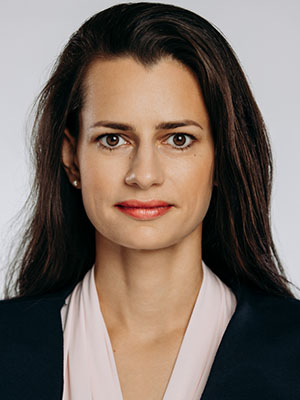
Beyond Rewards: An Interview with Zsuzsa Kecsmar, Co-founder and Chief Strategy Officer at Antavo AI Loyalty Cloud.
Customers have grown tired of the old “earn and burn” loyalty model, seeking greater value for their money. To keep them engaged, loyalty programs will need to go beyond rewards, according to the latest Antavo Global Loyalty Report, co-authored by Antavo’s Zsuzsa Kecsmar.

Zsuzsa Kecsmar is the Co-Founder of Antavo AI Loyalty Cloud, one of the leading SaaS platforms in the world.”
This interview has been edited for length and clarity.
Practically every company these days feels the need to have a loyalty program of some kind. Anything to keep customers coming back.
With so many programs out there, all more or less cut from the same cloth, loyalty fatigue often sets in amongst customers. They’re always quick to enroll for the points, discounts and perks – why wouldn’t they? – but then they go dormant shortly after when the rewards turn out to be underwhelming.
Member activation is a persistent challenge for most loyalty marketers, exactly because there is so very little difference between one program and another, apart from the reward mechanics. “Spend this much to get this much in return” is the standard pitch. While the form of reward varies by industry – flights, stays, perks, freebies, cashback, etc – the value exchange is almost always purely transactional. The value of joining is reduced to a savings calculation. How long will it take me to earn my reward, and will it be worthwhile? Customers know they are being bribed with their own money – but better than being ripped off, they figure.
This reward model has stood up over time through two distinct eras – the trading stamp craze of the 1950s and 60s when 80% of households avidly kept stamp books which they redeemed for merchandise – and the modern points-based era that began when the airlines used their reservation databases to enroll frequent fliers. Ever since then program designers have stuck to the same proven “Give-to-Get” playbook.
With the sudden rise of agentic commerce, however, there is an urgent need to improve the perception of program value amongst members – to go beyond rewards. For one thing, brand loyalty is in decline. Today people feel they are nothing more than pawns on a chessboard – paying more to get less – treated like an ATM machine. They feel caught on a “hamster wheel of debt”1, leaning on credit to make ends meet. But thanks to AI shopping assistants, power is finally shifting to them, as these personal agents boil brand choice down to the most nutritious facts, no matter what the rewards-to-point ratio may be.
If a brand’s citable attributes – price, features, Reddit reviews, 3rd party ratings – don’t stand up to scrutiny – if the brand is easily substitutable, with no distinctive claims – it will never make it past the starting line, disqualified from even competing. The only countervailing strategy, aside from being noticeably best or better at something, is to augment the value proposition – more personalized experiences, more active customer recognition, more compelling entitlements – to do whatever it takes to make customers feel the brand actually cares about them. As the new Kraft Heinz CEO recently said, “Consumers are literally running out of money toward the end of the month. Being there with the right offering at the right time has never been more important.”2
That’s why more money is being pumped into loyalty programs than ever before. The global market is expected to grow at a CAGR of almost 11% over the next 7 years. Loyalty is finally being seen as a growth driver – as a business imperative. Loyalty databases are deemed a strategic asset – the key to unlocking future cash flow. What’s more, the program ROI is easier to prove than ever before. Centralized loyalty engines that capture the full extent of customer interactions are now crucial to not only driving customer engagement and repeat purchase but revealing distinct and actionable behavioral segments. But before the full potential of loyalty programs can be realized, brands have to first ask themselves this question: “What would make a customer choose them if there were no rewards attached”?
The answer, according to the 5th annual Antavo Global Customer Loyalty Report, is to go beyond rewards and make every interaction feel valuable. Antavo is a London-based loyalty technology company that got its start 14 years ago and has since grown into one of the major platform suppliers in the market with clients across many different B2C sectors in Europe and elsewhere.
As Antavo points out in the report, customers don’t feel as valued as loyalty marketers would like to believe. Loyalty programs can break out of the sameness trap and deliver more rewarding experiences by mapping the data they have to the preferences of customers.
The report, brimming with facts and insight, is one of the largest and most comprehensive of its kind. One of the main authors of the Report is the Hungarian-born Co-Founder and Chief Strategy Officer Zsuzsa Kecsmar. She was named Personality of the Year at the 2024 International Loyalty Rewards, and named by Forbes as one of Europe’s top 100 female founders in tech.
Stephen Shaw (SS):: You started off as a radio producer and broadcaster. How did you make the leap from broadcasting to martech?
Zsuzsa Kecsmar (ZK):: In order to make it successfully in media, you need to have a certain personality. And I thought, that’s just not me. I’m not talented enough. So, what is my path? Then I met my co-founders and realized that, yeah, software as a service, that is something we can succeed at together.
SS: Tell me about the origin story behind the business.
ZK: So I was in the final year of university when I met my future husband. He wanted to hire me to do some marketing work for his business. And then we found ourselves building this software as a service company – this was back in 2011, 2012 – specializing in contests and sweepstakes. But demand was very seasonal. So we left our old product behind, which was used by 30,000 customers, including American Airlines, and pivoted toward loyalty because we realized that the industry was at an inflection point.
At the time it was only the bigger companies, the big airlines, the hotels, who had loyalty programs. And then smaller companies started to create their own loyalty programs because it became less costly due to SaaS technology. Our technology was able to support multiple channels and countries at the same time. And then starting in 2020 we were able to grow globally. Today we serve large companies like Hyatt Hotels, Tommy Hilfiger, Calvin Klein, the crop sciences division of Bayer and great established companies like Flying Tiger, Paul Smith, and KFC. I would say our sweet spot is mid-market companies who have a relatively modern technology stack and would like a loyalty platform that can scale.
SS: What makes your platform distinctive?
ZK: With our software as a service platform, running a loyalty program is secure and effective and scalable. And with our two new AI products, the Planner and the Optimizer, we’re providing an AI data analyst to optimize the loyalty program.
SS: Your most recent Global Loyalty Report is called the “Age of Value”. What made you give it that title?
ZK: This is the 5th edition of the Report, so we have an historical understanding of the evolution of loyalty programs. The first era was the “points age”, when it was mainly airlines, hotels, and credit card companies who had these currency-based loyalty programs, mostly simple points programs based on miles or “nights”. The second era was the “brand age” when smaller brands could afford to have their own loyalty programs. This is when phrases like omnichannel, gamification, personalization and brand experience became important. The third era is the “data age. This is when companies understood the importance of their existing customers and how they can use them as a source of growth. Today we have entered the “value age” when data is so important to train your company AI. The loyalty program is the single best consented data source of first party data.
SS: Give me the main takeaways from this year’s report.
ZK: The most important takeaway is that over a quarter of loyalty points go unspent. Almost 12% of points expire unspent. And we know that reward redemption rate is a very important health metric. So that’s one takeaway.
SS: At one time that kind of breakage was very profitable because the company could pocket the difference. Are companies realizing that’s probably not the best thing to do to win customer loyalty?
ZK: Exactly. 74% of loyalty program members will quietly quit – ghost you after just two months. There are many reasons they are disappointed. First of all, it takes too long to earn rewards. The second is that rewards expire before customers can use them. Third is unattractive rewards. Fourth is a lack of great deals. And fifth is hygiene stuff like technical errors or unclear rules.
SS: What else stood out for you in this report?
ZK: In the case of businesses that have a loyalty program, more than 50% of the total marketing budget is now being allocated to loyalty and CRM. That’s quite a high number. It shows that investing in existing customers is a true growth engine. Before that these numbers were closer to 35%. We also think the reason is that advertising with Meta and Google has become much more difficult and expensive.
SS: Another fact that stood out for me is that only 56% of customers said that loyalty programs make them feel valued. That strikes me as low when you consider the whole point of a loyalty program. What would make customers feel more valued?
ZK: Taking less time to earn rewards, clearer rules, more flexible rules around reward expiration, more attractive rewards, better rewards.
SS: I think the other thing that stood out for me was the type of rewards. Has there been a change in the desire of customers for, say, experiential awards or rewards that go beyond discounts?
ZK: Yes, definitely. The way we put it is that customers “come for the meat but stay for the gravy”. It’s very important that there is a strong financial reward which is the main driver. But there needs to be all the rest of the things that will make people stay and appreciate the loyalty program.
SS: Another aspect is going above and beyond for those customers who are driving 60 % or 70% of the business – that there’s recognition and specific entitlements for them. Do you see that going on with companies today?
ZK: Yes, and they do that very well, fortunately. Many companies realize how important it is that their very best customers are happy. We have customers who have “secret tiers” in their tiered loyalty program, not visible to the public eye, reserved for those who are the best customers. It’s basically the equivalent of that custom phone number that you would have received in your Diamond airline card 10 years ago.
SS: The other thing that stood out for me is that most marketers are satisfied with the revenue impact of their programs.
ZK: Yes. And this is a growing trend. When we started this report in 2022, just 50% of marketers were satisfied with the loyalty program. And today it’s 83%. What are the reasons why people are happy with their loyalty program? Number one reason is that a loyalty program gives an opportunity for deeper engagement with customers. A loyalty program provides a platform where you can talk with them without just encouraging them to buy. This is what fostering deeper engagement means. Number two, it can help them drive repeat purchases and incremental sales. Number three is they can gather valuable customer data.
SS: I was blown away by the fact that there are so many countries covered in the report. You have all of these comparative statistics. And it’s interesting to just go down the list, comparing one country to another. I was also impressed by the diversity of industries operating loyalty programs. Is that another trend you’ve seen over the years, just the expansion of loyalty into new categories and industries?
ZK: Yes, definitely. And you are right – years ago it would be really just the hotels, the airlines, the credit card companies. Today we have all kinds of customers. One is selling toys, both directly and then through department stores. The other is selling chicken, like every day, multiple times. The other is selling fertilizers and pesticides. So it’s all kinds of companies. Obviously a client like Tommy Hilfiger, which is luxury fashion, is very different from an Icelandic supermarket chain. The same technology can power multiple kinds of loyalty programs.
The report helps people find benchmarks for their own industries and customer segments and geographies. It helps them pitch their ideas to their clients, their management, their board. We give them basically the numbers to refer to.
SS: Loyalty programs have in the past tended to be silos operating independently of a broader CX strategy. Are you seeing those boundaries begin to blur?
ZK: It’s a good question. And we have research around this. So last year we asked where the people who work on loyalty programs report to, and most of the time they report to where CX reports to, and most of the time CX reports to marketing.
SS: What are some of the more novel approaches to program design that you’re beginning to see?
ZK: Let me tell you two examples. First is the example of Paul Smith3. British luxury menswear. And they have a loyalty program running on Antavo. They have an online store and 80 stores in 20 countries globally. The CEO Paul Smith is a collector. He’s this quirky personality, very playful. The whole brand is very playful. And what I really like about them is that this playfulness translates well into the loyalty program. Their whole program is about stamp collection. In one of their stores, there is this hallway tiled with dominoes. One of the tiles is not a domino, but a QR code. When you scan it, you unlock one of the rewards. So what a beautiful practice this is – the brand’s DNA is about this fun approach, this playfulness. The founder’s personality was able to be translated into the loyalty program.
SS: It’s a form of gamification, really.
ZK: It is.
SS: What’s the other example?
ZK: Well, sometimes, what is novel and innovative is the simplest thing. Flying Tiger4 is quite big in Europe. They have a couple of stores in North America too. They sell these knickknacks, things for the household, from toys to household supplies. Something like Ikea, but without the furniture. They relaunched their loyalty program with Antavo. And the most beautiful thing is that it is very well embedded into the customer experience.
In their stores you need to follow a path in the store till you get to the self-checkout. Their big challenge was how to make the loyalty program personal enough and simple enough that it would fit this self-checkout flow and still provide value. They connected the loyalty program with their POS system. So after I scan my card and identify myself, the POS changes and I see on screen the rewards available for me. And that was the strength of it – its simplicity. And as a result today, 60% of their purchases are coming from members and members’ basket size is actually 60% higher than non-members.
SS: Do you see distinct differences across cultures and countries in terms of consumers’ attitudes toward loyalty? Are there countries that just seem to be more intrinsically loyal than others?
ZK: There are some differences that we observed. For example, in the United Arab Emirates, most people prefer mobile apps. The demographic there is usually quite young so I think that’s why. Or interestingly in Australia and the UK people prefer plastic cards. Finances come first for people in the UK whereas in the Middle East, in Qatar, it’s the least important. So there are these nuances that you can glean from the report tables.
SS: I want to go back to technology. Who has point these days on the management of the technology? Is that a marketing ops group? Is it the program managers themselves? Is it IT? Is it some combination of the above?
ZK: Great question. Implementation usually sits with IT. But there is this special breed of people who are both technical and business savvy. These are the product owners. They think of the loyalty platform as a product. I really like those kinds of people. They are very smart usually. If there is one hero, however, it is the CTO who realizes the need to help the loyalty team become self-sufficient, giving program managers the tools, so marketing is not running to IT all of the time.
SS: Who owns the budget?
ZK: Usually it’s marketing who owns the budget for running a loyalty program. And in terms of implementing it, oftentimes IT has a budget for implementation. And ongoing costs are marketing costs.
SS: Has it become easier over the years to implement and operationalize your platform?
ZK: Oh, very much. We’re able to certify any kind of agency who would like to make money implementing Antavo and provide it as a service to their own customers. There is a growing number of Antavo certified agencies all over the world, which I’m very proud of. This report that we just published was sponsored by Digitas in North America, EPAM’s Empathy Lab, Data Lab, which is a loyalty agency based in Germany, and Stratalix from Canada.
SS: What are the biggest obstacles you’re finding in terms of implementation?
ZK: The biggest hurdle oftentimes is that companies don’t know what a big undertaking it will be when they launch a new program. Marketing automation is one decade ahead of loyalty. So because it’s not that institutionalized there are things that can be misunderstood. Also there are a lot of different stakeholders – including the agency and sometimes an integrator. So oftentimes there is confusion about what should be done.
That’s what prompted us to build our first AI product, the Planner. If there is an internal brief, if you know what kind of loyalty program you would like to launch, you can feed this into our AI and it basically spits out a map that you can drill down on. It will ask you all the right questions – have you thought of this and that? And it doesn’t stop till you figure things out.
SS: And I think you’ve also incorporated AI, as you mentioned earlier in this conversation, with your analytical tool. Explain to me how that works.
ZK: To analyze a loyalty program in the past, companies exported the data, put it somewhere, tried to get the answer, then put it back. We build a layer on top of the existing data so you can interrogate it in a non-expert way. You don’t need to be a data analyst – you just use your own simple words, just like you would using ChatGPT.
SS: How do you see AI being incorporated going forward?
ZK: There are multiple usages, so many, it’s a whole new world. First of all, how AI is changing software as a service. You will not need to spend weeks learning Antavo. Because you can use it as a non-expert with your prompts, with your words, just like ChatGPT, with a simple language interface. Today the code is a language. So this is one fundamental change. The other is how consumers are getting answers, how consumers are searching. Businesses need to appear in these chat conversations.
SS: It seems to me the lines are beginning to blur between some of the more conventional martech platforms that support campaigns and communications, and loyalty platforms. Do you become an all-in-one marketing suite at some point?
ZK: Some marketing automation companies have acquired loyalty management platforms and are now one big suite. That is horizontal software – one piece of software that is able to do all kinds of things. The value lies in being integrated. But Antavo is a vertical piece of software. We are experts in loyalty and only that. Interestingly our best partners are marketing automation companies. They very clearly understand where they end and we start. Partners like Braze, Insider [One], Klaviyo.
SS: Five years from now when you do this report, what’s it going to tell you that’s changed the most?
ZK: Yeah, interesting question. Organizations will change. Today’s middle layer between software users and software engineers will dissolve I think. There will be deep tech; there will be product owners; and there will be the business side. They will work closer together because they will have this new shared language – not a no-code tool or any kind of software, but naturally spoken language powered by AI.
1 – “Consumers Lean on a “Hamster Wheel” of Credit to Manage Rising Costs”, New York Times, May 10, 2026
2 – “Kraft Heinz CEO Pushes Value: ‘Consumers Are Literally Running Out of Money’”, Wall Street Journal, May 06, 2026.
3 – Paul Smith is a renowned British fashion designer. His flagship stores are famous for being eccentric. His Collectors Club rewards program involves members collecting stamps for exclusive perks and benefits.
4 – Flying Tiger is a Danish variety retail chain with 1,000 stores worldwide and known for its affordable home decor, stationery, toys, and hobby products. Stores are designed with a winding path (a “maze”) that encourages discovery.
Stephen Shaw is the Chief Strategy Officer of Kenna, a marketing solutions provider specializing in delivering a more unified customer experience. He is also the host of the Customer First Thinking podcast. Stephen can be reached via e-mail at sshaw@kenna.