Attitudinal Segmentation Analysis
Attitudinal segmentation is a research methodology that is used when marketers want to better understand the motivations and emotions behind consumer decision making. Knowing the unique attitudes and decision drivers of different customer segments can reveal what they care about; their brand preferences and choice; their lifestyle orientation and values; and how they make decisions.
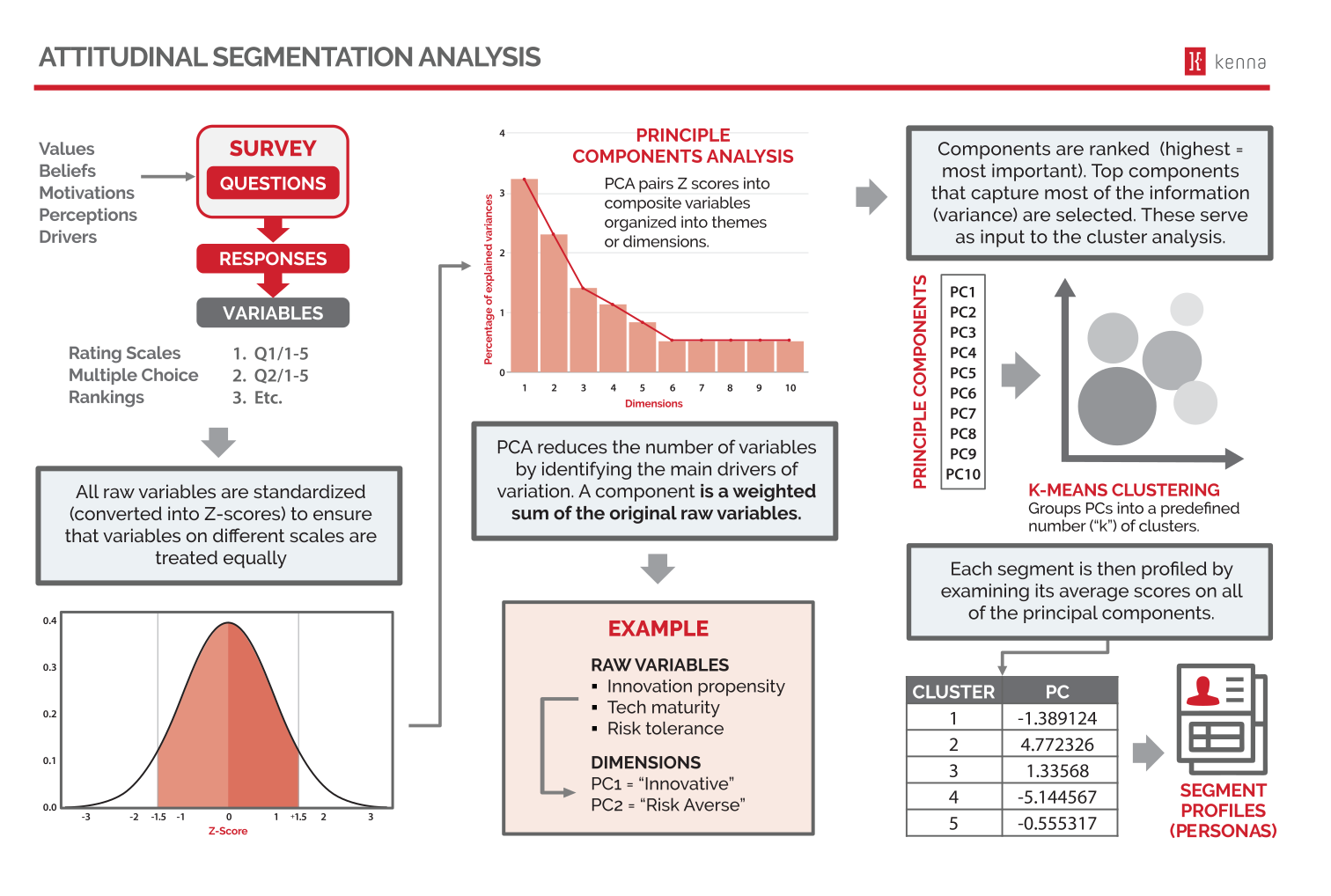
To identify these attitudinal segments, a survey is used to collect the data, using closed-ended questions with rating scales and rankings. The responses are converted into standardized variables which are then filtered through a statistical routine called Principle Components Analysis. This reduces the number of variables to just those which best explain the underlying attitudes. The highest ranked components are then run through a segmentation routine called K-means clustering. The output of the analysis is a set of “clusters” which can be described and profiled using the most important components.
A vivid picture can then be drawn of the customers in each segment in the form of personas. Those personas can be used to rally the organization around the needs of customers, while allowing marketers to devise more effective segment-based strategies.
Click to enlarge image